


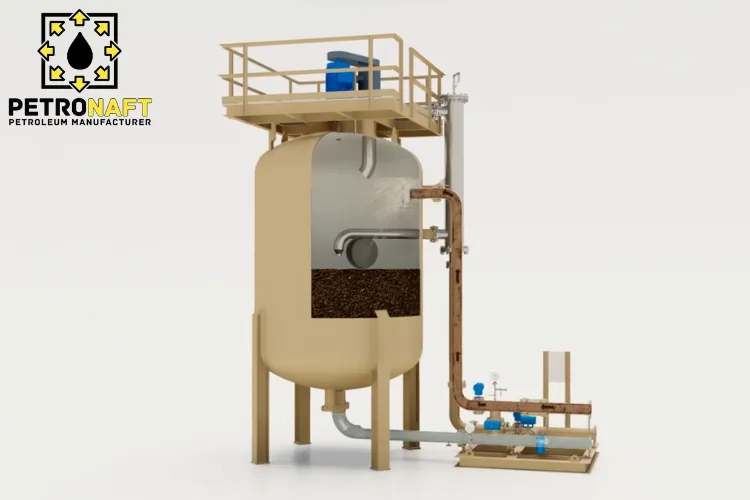
Walnut Shell Filter Production converts cleaned walnut shells into uniformly sized, low-dust granules that resist attrition and lift oily solids from water. A good process includes washing, drying, crushing, multi-stage sieving, polishing, and batch testing (moisture, size distribution, hardness, fines). Done right, you get stable media that backwashes cleanly and lasts longer.
Industrial buyers don’t fail because “walnut shell media doesn’t work.” They fail because the media is inconsistent.
In this guide you’ll learn:
- The exact production steps that separate premium media from dusty, fast-wearing batches
- Which mesh grades fit oily water, wastewater, and filtration skids
- The QC tests and COA items that protect your filter performance and budget
Highlights & Key Sections
What Walnut Shell Filter Media Is Used For (and Why It’s Different)
Walnut shell media is a granular filtration material valued for oily-water service because it combines:
- Oleophilic behavior (oil tends to adhere to the surface)
- Lower density than sand (helps backwash and bed expansion)
- Resilience (can survive repeated backwash cycles when properly processed)
Common applications:
- Produced water and refinery wastewater polishing
- Industrial wastewater with oils/grease and suspended solids
- Pretreatment before membranes (when designed to protect RO/UF)
- Process-water reuse loops where stable differential pressure matters
Quick match table: application vs media choice
| Application | Primary target | Typical media preference | Practical note |
|---|---|---|---|
| Produced water polishing | Dispersed oil + TSS | Low-fines, medium grade | Dust/fines drive fast ΔP rise |
| Refinery wastewater | Oil + solids | Consistent grading + good attrition resistance | Backwash strategy must be gentle but thorough |
| Pre-membrane protection | TSS reduction | Tighter grading, low turbidity rinse | Any fines can foul membranes |
| Cooling/process reuse | Fine solids + occasional oil | Medium-to-fine grade | Consistency reduces operator “chasing” |
Walnut Shell Filter Production: Step-by-Step Guide
A production line should be designed around one goal: tight size distribution with minimal fines, without “over-processing” the shell into dust.
Process flow at a glance
Raw shells → de-stone/metal removal → washing → drying → crushing/milling → multi-stage screening → air classification (de-dusting) → polishing/conditioning → QC testing → packaging & traceability
Step 1) Raw shell selection and receiving controls
What matters at the gate:
- Shell type and hardness consistency (mixed sources can vary)
- Low contamination (soil, stones, metals, kernel residue)
- Traceable lots (date, supplier, origin, moisture)
Hands-on tip: Open 3–5 bags per lot and do a quick visual check for kernel remnants. Kernel residues can increase odor, biological growth risk, and “sticky” fines during crushing.
Step 2) De-stoning and metal removal
Before washing or milling, remove heavy and sharp contaminants:
- Vibratory separator / destoner for rocks and sand clumps
- Magnets and metal detectors for tramp metal
Why it matters:
- Rocks create spark and wear in mills
- Metal fragments destroy screens and contaminate product
Step 3) Washing and de-oiling (where many batches win or lose)
A controlled wash removes:
- Dirt and soluble impurities
- Residual organics that can create odor or excessive fines
Good washing is not “more water.” It’s repeatable chemistry + agitation + rinse quality.
Mini tutorial: Simple rinse clarity test
- Add a handful of pre-screened media to a clear jar of clean water
- Shake 10 seconds, let settle 60 seconds
- If the water stays cloudy, you have a fines problem that screening alone may not fix
Step 4) Drying to a consistent moisture window
Drying stabilizes crushing behavior and reduces clumping in screens.
Targets (typical, application-dependent):
- Keep moisture low enough to prevent clumps and microbial risk
- Avoid overdrying if it increases brittleness and dust generation
Drying options:
- Rotary dryer (high throughput)
- Belt dryer (gentler handling)
Step 5) Crushing / milling (control the fines, don’t “chase” throughput)
Crushing should produce granules, not powder.
Best practices:
- Use staged reduction (coarse crush → final sizing)
- Control rotor speed and feed rate
- Avoid re-crushing already-on-size particles
Common mistake:
- Overfeeding a mill raises temperature and generates extra fines that later “look like” a screening problem.
Step 6) Multi-stage screening into saleable grades
Screening typically uses vibrating decks with standard mesh cuts.
Keys to tight grading:
- Use at least two separation points (top cut + bottom cut)
- Monitor screen blinding (especially if moisture drifts)
- Recycle oversize to controlled re-crush, not uncontrolled milling
Mini tutorial: practical sieve analysis (buyer-side)
- Take a representative sample (not “from the top of the bag”)
- Weigh sample, sieve for a fixed time, weigh each fraction
- If “undersize” is high, expect dust, high start-up turbidity, and faster ΔP rise
Step 7) Air classification / de-dusting
Even great screening won’t remove ultra-fines efficiently. De-dusting is what separates premium media.
Common tools:
- Air classifier / aspiration
- Cyclone + filter system
- Dust-controlled conveyors and sealed transfer points
What you gain:
- Faster commissioning (less rinse time)
- Cleaner backwash water
- Lower risk of downstream fouling
Step 8) Polishing / conditioning (improves durability and hydraulics)
Polishing is controlled tumbling that:
- Knocks off weak edges
- Rounds sharp fragments
- Reduces “break-in” fines during the first backwash cycles
If you operate oily-water filters, this step often shows up as:
- Lower initial turbidity
- More stable pressure drop week-to-week
Step 9) Optional thermal conditioning (used for specific duty)
Some producers apply controlled heat treatment to:
- Reduce residual organics/odor
- Improve stability in harsh service
- Lower biological risk in warm storage conditions
This is not mandatory for every application. It should be justified by duty conditions (storage, temperature, contamination risk).
Step 10) Batch blending and traceability
For consistent performance, blend within controlled limits:
- Same grade, compatible lots
- Document blend ratio and lot IDs
- Keep retains (sealed samples) for dispute resolution
Step 11) Final QA/QC and certificate of analysis (COA)
Do not rely on “nominal mesh.” Require measured distributions and fines limits.
A practical QC plan includes:
- Particle size distribution for each batch
- Moisture content
- Bulk density and/or specific gravity checks
- Fines/turbidity rinse indicator
- Simple attrition resistance screening (especially for high backwash frequency sites)
Step 12) Packaging and shipment controls
Packaging is a quality step, not an afterthought.
- Use lined bags or sealed sacks to prevent moisture pickup
- Include grade, lot ID, net weight, and production date
- Protect from oil/chemical odors in mixed freight
Production control table (useful for manufacturers and buyers auditing a plant)
| Step | Critical control | What goes wrong | What it looks like in the field |
|---|---|---|---|
| Washing | Rinse clarity + contamination removal | Residual dirt/organics | High start-up turbidity, odor, sticky fines |
| Drying | Moisture stability | Clumping or brittle over-dry | Screen blinding or high dust |
| Crushing | Feed rate + staged reduction | Over-milling | Too many undersize particles |
| Screening | Deck integrity + time | Worn screens / poor cuts | Wide grading, unstable ΔP |
| De-dusting | Airflow + capture | Fines not removed | Long rinse time, fouling complaints |
| Polishing | Time + intensity | Under/over conditioning | Early attrition or excess break-in fines |
Buyer-Facing Specifications That Actually Protect Performance
If you only request “8/12” or “12/20,” you’re buying a label—not a predictable filter bed.
COA must-haves (practical list)
Ask for:
- Grade designation + full particle size distribution
- Percent fines below the bottom cut (define your threshold clearly)
- Moisture content at shipping
- Bulk density (helps predict bed weight and expansion behavior)
- Attrition/abrasion indicator (even a simple internal method is better than none)
- Rinse turbidity indicator (or a standardized “wash water clarity” check)
- Lot traceability and retained sample policy
Typical spec ranges (use as guidance, then align to your system)
| Parameter | Why it matters | Typical target (varies by duty) |
|---|---|---|
| Size distribution | Controls hydraulics and capture | Tight cut, minimal tailing |
| Fines content | Drives ΔP + turbidity | As low as practical for your filter design |
| Moisture | Storage stability, screening quality | Stable, controlled window |
| Bulk density | Predicts bed mass and backwash | Consistent batch-to-batch |
| Attrition resistance | Media life + carryover | Higher is better for frequent backwash |
| Rinse clarity | Commissioning time and membrane safety | Clear quickly with minimal rinse cycles |
Real-world rule: If two media options cost the same, choose the one with documented low fines and tighter grading. It usually saves money in commissioning time, operator hours, and backwash water.
Choosing the Right Grade (Mesh) for Your Filter
Use grade selection to balance:
- Capture efficiency
- Pressure drop
- Backwash cleanability
- Oil loading and solids characteristics
Common grades and what they’re good at
| Common grade (US mesh) | Approx. particle range (mm) | Best for | Trade-off |
|---|---|---|---|
| 8/12 | ~2.36–1.70 | Higher flow, heavier solids | Less fine capture |
| 12/20 | ~1.70–0.85 | General oily-water filtration | Needs good de-dusting |
| 20/40 | ~0.85–0.425 | Finer solids polishing | Higher ΔP, more sensitive to fines |
Mini decision guide:
- If your biggest problem is rapid pressure rise, first reduce fines and consider a coarser grade.
- If your biggest problem is oil sheen breakthrough, confirm backwash effectiveness and consider slightly finer media (only if fines are controlled).
Operating Factors That Determine Media Life (Even With Perfect Production)
Good media can still fail in poor operating conditions. Watch these:
- Backwash intensity: too gentle leaves oil/solids; too aggressive increases attrition
- Bed expansion control: inconsistent expansion causes channeling or media loss
- Chemistry shocks: oxidants, extreme pH, or solvent exposure can weaken organics-based media
- Start-up procedure: skipping initial rinse cycles pushes fines downstream
Mini case example (anonymized)
A produced-water unit saw weekly filter plugging and rising backwash frequency. The root cause was high fines and wide grading in the media, plus an overly aggressive first-week backwash. Switching to a low-fines batch with tighter PSD and using a staged commissioning rinse stabilized ΔP and reduced backwash demand.
Common Problems and Troubleshooting
| Symptom | Likely cause | Quick test | Practical fix |
|---|---|---|---|
| High turbidity during start-up | Excess fines / poor de-dusting | Jar shake + settle | Longer rinse, change supplier/QC limits |
| Fast ΔP rise | Wide grading, fines, or poor backwash | Sieve analysis + backwash review | Tighten PSD, improve backwash sequence |
| Media carryover | Too light/fines or excessive backwash | Check backwash rate + strainers | Reduce backwash peak, improve retainers |
| Oil breakthrough | Channeling or overloaded bed | Inspect bed condition | Adjust backwash, check loading, consider grade |
| Short media life | Low attrition resistance | Compare before/after sample | Require attrition metric, add polishing step |
Trends and Innovations Shaping Nutshell Media and Filtration (Why It Matters for Buyers)
Two trends are influencing procurement and performance expectations:
- Upgraded/modified nutshell media: Some plants demand higher hydrocarbon capture and lower carryover, pushing media suppliers toward surface conditioning and tighter QC.
- Automation and monitoring: Operators increasingly track ΔP trends, backwash KPIs, and water quality digitally. Consistent media lots make those controls meaningful; inconsistent media makes them noisy and unreliable.
Also, sustainability is becoming a real filter-media decision factor:
- Using agricultural byproducts aligns with circular-economy procurement goals—as long as QC is strict.
Conclusion
Walnut Shell Filter Production is only “simple” on paper; in practice, the winners control fines, grading, and traceability from receiving through packaging. If you buy media based on a mesh label alone, you risk long rinses, unstable pressure drop, and short service life. Buy (or manufacture) based on measured PSD, de-dusting performance, and batch QC—then match the grade to your hydraulics and oil/solids load.
Executive Summary Checklist (printable)
- Lot traceability exists (supplier, date, batch ID, retained sample)
- Full particle size distribution provided (not just “12/20”)
- Documented low fines (clear threshold agreed in writing)
- Moisture is controlled and stable at shipment
- Rinse clarity / turbidity indicator is acceptable
- Attrition resistance indicator is provided for your duty severity
- Grade selection matches your flow, ΔP limits, and backwash capability
- Commissioning plan includes staged rinse/backwash to remove break-in fines
FAQ
1) How long does walnut shell filter media typically last in service?
Service life depends on backwash intensity, oil loading, and media attrition resistance. In stable operations with controlled backwash, it can last multiple years, but high shear or frequent upset conditions shorten life quickly.
2) Is walnut shell media suitable for drinking water filtration?
It’s mainly used in industrial and oily-water applications. For potable systems, buyers usually require strict material approvals and standardized testing; confirm local regulations and required certifications before considering it.
3) What is the single biggest quality factor to request from a supplier?
A full particle size distribution with a defined fines limit. Low fines and tight grading reduce start-up turbidity, stabilize pressure drop, and lower the chance of downstream fouling.
4) Which mesh size is most common for oily wastewater filters?
Many systems use mid-range grades (often around 12/20) because they balance capture and hydraulics. The best choice still depends on your flow rate, solids profile, and backwash capability.
5) Can I “fix” dusty media on-site?
You can rinse longer and adjust commissioning backwash, but you can’t truly recreate factory de-dusting and conditioning. If fines remain high, you’ll keep paying in water loss, downtime, and unstable ΔP.
Sources
- Standards guidance on granular filter materials, handling, and contamination prevention: ANSI/AWWA B100 Granular Filter Material
- Industry reference on deep-bed walnut shell media filters and operational performance claims in produced water service: SLB PETRECO HYDROMATION Walnut Shell Media Filter
- Government overview of wastewater treatment technologies including granular media filtration and media examples: US EPA Industrial Wastewater Treatment Technology Database
- Peer-reviewed study discussing produced-water treatment and evaluation of agricultural-waste filter media options including walnut shell: Water (MDPI) – Treatment of Produced Water in the Permian Basin
- Technical literature highlighting nutshell (walnut/pecan) filtration as established produced-water polishing technology: OnePetro – Walnut Shell Filtration Paper Listing