


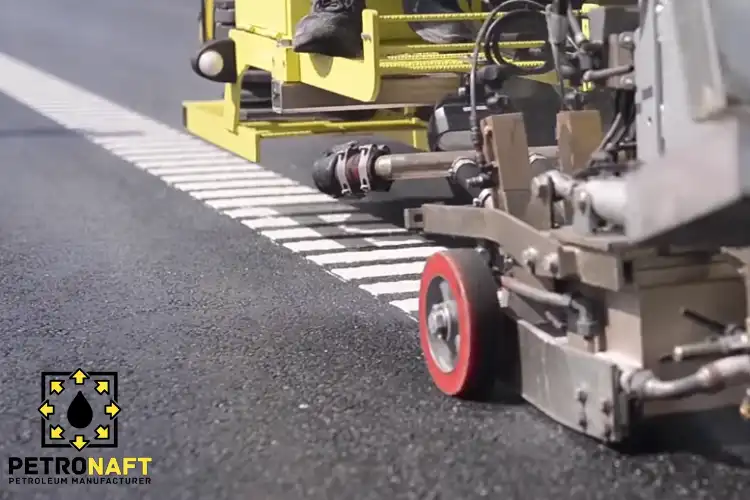
Polyethylene Wax for Road Marking Paints improves flow, surface slip, abrasion resistance, and application stability, helping markings apply more cleanly and last longer under traffic. When used at the right grade and dosage, it can reduce dirt pickup, sharpen line edges, and support a more durable surface without disrupting the core performance of the binder system.
Road marking materials work in a harsh environment. They must bond fast, resist traffic, hold glass beads, and stay visible in heat, rain, dust, and tire shear. That is why a small additive can make a meaningful difference when the formula is already technically sound.
A practical way to look at polyethylene wax is simple:
- It is not the main structural ingredient
- It is a performance enhancer
- Its value comes from balance, not high dosage
- The wrong grade can reduce adhesion or affect surface behavior
Highlights & Key Sections
Why Polyethylene Wax for Road Marking Paints Matters
In road-marking formulations, polyethylene wax is mainly used to improve processing and surface performance.
It can help with:
- Smoother application
- Better abrasion and scuff resistance
- Lower surface drag
- Reduced dirt pickup
- More controlled stripe formation
- Better handling during production
These improvements matter because road markings are judged in the field, not in the mixing tank. A material that applies neatly and resists early wear usually creates better value for contractors, municipalities, and long-term maintenance programs.
Key performance effects
| Function | What you usually notice | Why it matters |
|---|---|---|
| Flow support | Cleaner melt movement or laydown | More uniform stripe geometry |
| Slip control | Less drag and lower tack | Reduced pickup of dirt and rubber |
| Abrasion resistance | Slower surface wear | Longer visible service life |
| Surface protection | Better resistance to scuffing | Cleaner appearance over time |
| Process stability | Easier production consistency | Fewer adjustments in plant or field |
How It Works Inside the Formula
Polyethylene wax does not replace resin, pigment, filler, or glass beads. It changes how the full system behaves during melting, mixing, application, cooling, and early service life.
In many road-marking paints, especially thermoplastic and high-build systems, polyethylene wax helps the surface resist premature damage while making the material easier to apply in a controlled way. A suitable grade can create a tighter, more durable surface. A more compatible grade can also improve handling and process stability.
The best results usually come when the wax is matched to:
- Binder hardness
- Application temperature
- Desired balance between durability and workability
- Surface feel after cooling
A practical formulating insight
If a road-marking formula already bonds well but wears too fast, polyethylene wax is often a smarter adjustment than simply adding more filler. Extra filler may reduce cost, but it can also weaken toughness or application quality. A well-chosen wax often improves surface performance more efficiently.
What Buyers and Specifiers Actually Care About
Most buyers are not really buying wax. They are buying outcomes.
They want road markings that:
- Apply cleanly
- Open to traffic fast
- Look sharp
- Resist wear
- Require fewer maintenance cycles
That is why polyethylene wax becomes commercially valuable when it improves visible field performance, not just laboratory numbers.
Benefit by user type
| User type | Main concern | How polyethylene wax helps |
|---|---|---|
| Road-marking contractor | Easy application and fewer callbacks | Better laydown and cleaner edges |
| Municipality | Service life and maintenance budget | More durable markings and slower wear |
| Highway authority | Long-term visibility | Better surface protection in service |
| Paint manufacturer | Process consistency | More stable production and repeatability |
| Distributor or exporter | Reliable saleable performance | Easier technical positioning |
How to Choose the Right Polyethylene Wax Grade
Not all polyethylene wax grades behave the same way. Selection should start with the coating type and the processing method.
| Wax type | Best fit | Main strength | Watch-out |
|---|---|---|---|
| Low-molecular-weight PE wax | Thermoplastic and hot-applied systems | Flow support and durable surface feel | Too much can increase brittleness |
| Micronized PE wax | Liquid and cold-applied systems | Slip, abrasion control, easier surface tuning | Particle size must suit the system |
| Oxidized PE wax | More polar systems | Better compatibility in some formulations | May change rheology |
| Harder PE wax grades | Hot climates and heavy-wear conditions | Better pickup and scuff resistance | Excess may reduce flexibility |
What to verify before approval
Check these points before choosing a grade:
- Melting or softening range
- Particle size if the system is liquid
- Oxidized or non-oxidized type
- Effect on viscosity at application temperature
- Effect on adhesion and bead embedment
- Performance after cooling and early wear
A data sheet is useful, but a real lab comparison is what confirms suitability.
Practical Examples
Example 1: Urban thermoplastic line in hot weather
A common complaint in summer is that the marking looks fine at first but quickly shows dirt pickup and early surface damage. In this case, a slightly harder polyethylene wax at a controlled dosage can improve surface toughness and reduce pickup without changing the whole formula.
The key is to recheck:
- Melt flow at working temperature
- Surface pickup after cooling
- Abrasion resistance
- Glass bead anchorage
The goal is not to make the surface overly slick. The goal is to make it more resistant to service damage.
Example 2: Low-speed markings with poor edge definition
Some contractors struggle with line edges that spread more than expected after application. A well-matched polyethylene wax can help tighten the surface response and improve the final look of the stripe, especially where visual neatness matters.
Mini Tutorial: How to Test It Correctly
A useful screening process does not need to be complicated.
Step 1: Build three versions
Prepare:
- One control formula
- One low-dose polyethylene wax trial
- One higher-dose polyethylene wax trial
Step 2: Measure what matters
Test the properties that affect real field performance:
- Application behavior
- Viscosity or melt stability
- Surface pickup
- Abrasion resistance
- Bead anchorage
- Final appearance after cooling
Step 3: Choose the lowest effective dose
This is the most important rule.
The best formula is usually not the one with the highest wax dosage. It is the one that delivers a clear improvement without creating side effects such as poor adhesion, weak bead retention, or excessive hardness.
Common Mistakes and Better Fixes
| Problem | Likely cause | Better fix |
|---|---|---|
| Surface wears too fast | Wax level too low or grade too soft | Test a harder or better-matched grade |
| Poor adhesion | Wax overdose or poor compatibility | Reduce dosage and rebalance the system |
| Weak bead anchorage | Surface sets incorrectly or becomes too slick | Lower wax level and review process conditions |
| Brittle marking | Wax hardness too high | Use a more balanced grade |
| No visible improvement | Wrong wax type for the binder system | Change grade before increasing dosage |
Where Polyethylene Wax Adds the Most Value
Polyethylene wax is most useful when the formula already has a good structural base and needs refinement.
It often adds the most value when you want to improve:
- Wear life
- Application neatness
- Dirt pickup resistance
- Surface durability in hot or high-traffic areas
- Production consistency
It adds less value when the real issue comes from another part of the formulation, such as:
- Weak binder selection
- Poor application temperature control
- Incorrect bead dosing
- Excessive filler loading
- Weak substrate preparation
This distinction matters because many disappointing wax trials fail for the wrong reason. The wax is asked to solve a binder problem.
Current Trends That Make This Additive More Relevant
Road-marking performance is being judged more strictly than before. Buyers and specifiers increasingly focus on durability, visibility retention, cleaner application, and lower lifecycle cost rather than just initial material price.
Another important trend is the growing role of machine vision in transportation. Clear, durable horizontal markings now matter not only for human drivers, but also for camera-based lane detection systems. That makes line quality and wear resistance more commercially important than they once were.
Sustainability is also influencing buying decisions. Longer-lasting markings can reduce maintenance frequency, traffic disruption, and material consumption over time.
Is It Worth the Added Cost?
In many cases, yes.
Polyethylene wax is a relatively small part of the total formulation, but it can influence application quality, visible wear, and overall service life. If it helps the marking last longer, stay cleaner, and reduce field defects, its cost is often justified by the performance return.
For commercial buyers, the best question to ask is this:
What measurable improvement does this wax grade deliver in my specific road-marking system?
That question usually leads to a better decision than comparing price alone.
Conclusion
Polyethylene Wax for Road Marking Paints works best as a precision additive that improves surface performance, process stability, and durability when it is matched correctly to the binder and application method. The smartest approach is to choose the right grade, test it at the lowest effective dosage, and judge success by real road-marking results, not by additive claims alone.
Executive Summary Checklist
Use this checklist before approving a formula or supplier:
- Confirm whether the system is thermoplastic, cold-applied, or liquid
- Match the wax type to binder chemistry and processing method
- Test one control and at least two wax-adjusted versions
- Measure wear, pickup, adhesion, and bead anchorage
- Avoid overdosing to fix one property
- Check behavior at real application temperatures
- Focus on service life, not only additive cost
- Ask for technical performance data, not only marketing claims
FAQs
1) Is polyethylene wax necessary in every road-marking paint?
No. Some formulations can perform well without it. But when you need better abrasion resistance, cleaner application, or lower dirt pickup, polyethylene wax can be one of the most effective performance modifiers.
2) Does polyethylene wax improve retroreflectivity directly?
Not directly in the same way glass beads do. Its main value is improving surface durability and application behavior, which can help the marking maintain better overall performance over time.
3) What is the ideal dosage of polyethylene wax?
There is no universal dosage. The right level depends on binder type, filler loading, process temperature, and the target balance between workability and surface durability.
4) Which type is better: micronized, oxidized, or standard PE wax?
That depends on the formulation. Micronized grades often suit liquid systems, while other PE wax forms may fit thermoplastic systems better. The best choice depends on compatibility and performance goals.
5) Can too much polyethylene wax reduce performance?
Yes. Excessive dosage can hurt adhesion, disturb bead embedment, or make the marking too hard or too slick. In most cases, the best result comes from the lowest dose that creates a clear benefit.
Sources
- Federal Highway Administration explains how thermoplastic road-marking materials are built from binder, pigment, glass beads, and fillers, which helps frame the role of performance additives. FHWA TechBrief: Quickly Analyzing Thermoplastic Road-Marking Material for Titanium Dioxide
- Federal Highway Administration outlines the regulatory and performance context for pavement-marking visibility and maintenance. Pavement Markings Regulations / Standards
- This peer-reviewed review examines durability, environmental impact, and cost tradeoffs across pavement-marking materials. Performance, Environmental Impact and Cost Analysis of Marking Materials in Pavement Engineering
- Deuteron provides technical guidance on polyethylene wax behavior in coatings, especially abrasion resistance and slip-related performance. DEUTERON WAX PE Technical Data Sheet
- This recent study explores how degraded road markings affect lane detection and lane-keeping system reliability. Research on Reliability of Vehicle Line Detection and Lane Keeping Systems