


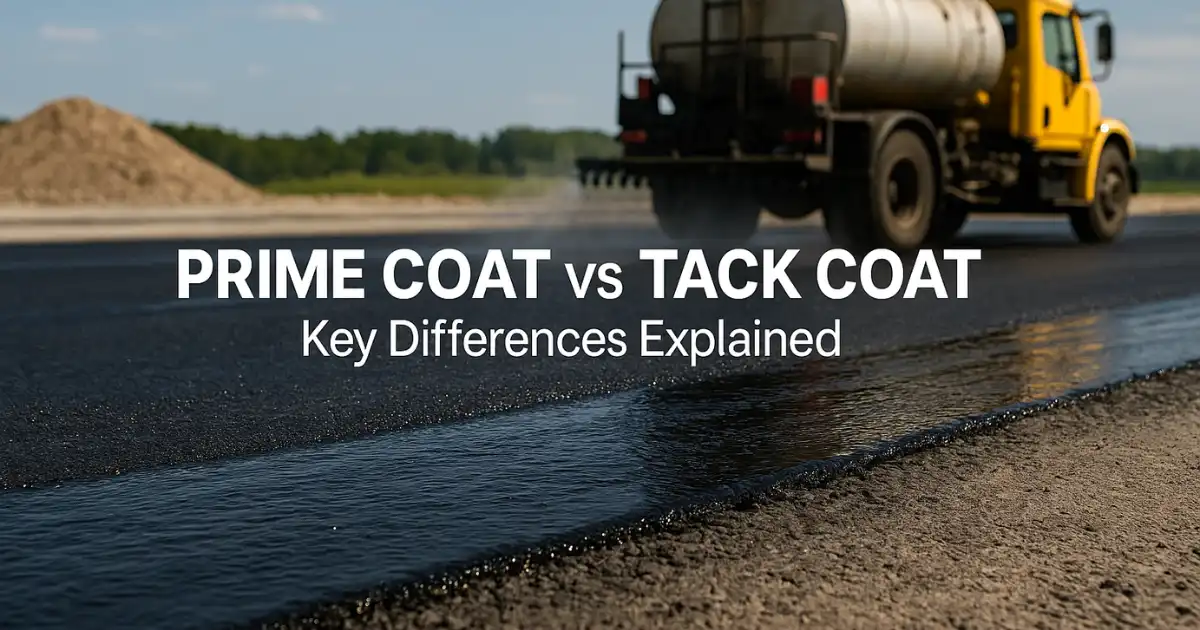
Prime Coat vs Tack Coat: prime coat is a penetrating bituminous treatment applied on untreated granular base to bind dust and stiffen the surface before paving; tack coat is a thin bonding layer applied between asphalt (or concrete) layers to prevent slippage and delamination. Using the wrong one usually shows up as cracks, shoving, or layer separation.
Highlights & Key Sections
Why this comparison matters on real jobsites
If you’ve ever seen an overlay “slide” at intersections, or watched a first lift ravel because the base was too dry and dusty, you’ve already met the consequences.
Common pain points this article solves:
Choosing the right coat when specs are vague
Avoiding bond failures (the #1 silent killer in overlays)
Preventing tracking/pickup and construction delays
Buying the right emulsion grade for your climate and crew speed
Prime Coat vs Tack Coat: the one-sentence difference
Prime coat is for stabilizing and sealing a granular base before the first asphalt lift.
Tack coat is for bonding two layers (asphalt–asphalt or asphalt–concrete) so they act as one structure.
Quick “where it goes” map
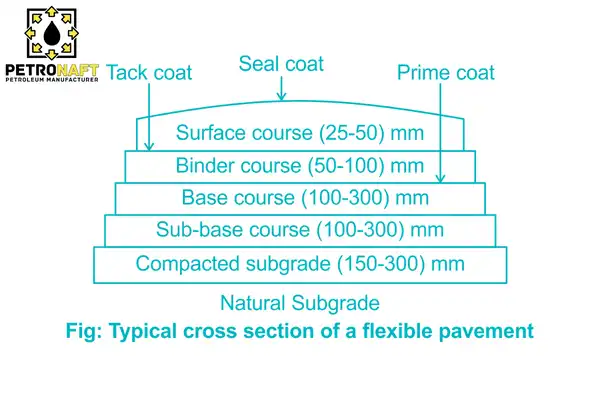
Prime coat: subgrade → granular base → prime → first asphalt layer
Tack coat: existing asphalt (or PCC) → tack → new asphalt layer
What a prime coat does (and when to use it)
Prime coat is typically used only when you have an untreated, unbound base (crushed aggregate base, WMM, granular subbase) and you need to prepare it for paving.
What prime coat is supposed to achieve
Penetration: moves into the top of the base to bind loose fines
Dust control: reduces “bond breaker” dust at the interface
Temporary moisture resistance: helps protect the base before paving
Surface cohesion: reduces aggregate loss from construction traffic
When prime coat is the right choice
Use prime coat when:
You’re paving over a new granular base and the surface is dry/dusty
The base will be exposed to traffic or weather before the first lift
The project is low/medium volume, and the base needs extra stabilization
When prime coat is usually NOT the right choice
Avoid or rethink prime coat when:
You’re placing asphalt on asphalt (that’s tack coat territory)
The base is cement-treated or otherwise stabilized and specs discourage priming
You need immediate paving—prime often needs time to absorb/set
Environmental restrictions make certain prime materials impractical (VOC/odor constraints)
Typical prime coat spray rates (rule-of-thumb ranges)
Rates vary by base texture and absorption—always follow project specs and test strips:
Granular base (more open): ~0.7–1.6 L/m² (higher end for very absorbent base)
Dense, tight base: ~0.4–0.9 L/m²
Field logic: if it sits shiny on top after a reasonable soak period, you likely oversprayed; if dust still lifts easily, you likely undersprayed or the base needed better sweeping and moisture conditioning.
What a tack coat does (and when to use it)
Tack coat is a bonding agent, not a sealer. Its job is to ensure the new lift and the old surface shear together under braking, turning, and thermal movement.
What tack coat is supposed to achieve
Bond strength between layers: reduces delamination and slippage cracking
Shear resistance: especially at intersections, roundabouts, bus lanes, steep grades
Uniform interface: helps the overlay behave like a single pavement layer
When tack coat is the right choice
Use tack coat:
Before any asphalt overlay on existing asphalt
On milled surfaces (almost always—milling creates texture but also dust)
Before paving over concrete (PCC)
Between lifts when the underlying lift has cooled and picked up dust/debris
On vertical faces (curbs, joints, edges) to improve joint integrity
Typical tack coat spray rates (practical ranges)
Tack is about thin and uniform. Too much can be as bad as too little.
On existing asphalt (clean, relatively smooth): ~0.15–0.35 L/m²
On milled asphalt (more texture): ~0.25–0.55 L/m²
On concrete (PCC): ~0.25–0.45 L/m²
Best practice idea: think in terms of residual binder after water evaporates. Emulsions are mostly water at spray time; the “sticky” part is what remains.
Key differences at a glance
| Item | Prime Coat | Tack Coat |
|---|---|---|
| Primary purpose | Penetrate/bind granular base | Bond layers so they act monolithically |
| Where applied | Untreated granular base | Existing asphalt, milled asphalt, or PCC |
| Desired behavior | Absorb/soak in | Form a thin adhesive film |
| Typical look | Darkening + partial absorption | Light, uniform “paint-like” film (no puddles) |
| Failure if wrong/missing | Raveling, dust interface, weak first lift | Delamination, slippage, shoving, reflective shear cracks |
| Common jobsite mistake | Sprayed on asphalt thinking it “helps bonding” | Overspray causing pickup/tracking and slick plane |
Material selection: what you’re actually buying
Both coats often use asphalt emulsions, but the “best” choice depends on climate, haul time, traffic control, and surface type.
| Use case | Common binder options | Why it’s chosen | Watch-outs |
|---|---|---|---|
| Prime on granular base | Slow-setting emulsion, specially formulated prime emulsions | Better absorption + lower VOC vs traditional cutbacks | Needs proper base condition; can delay paving if not set |
| Tack on asphalt overlays | Rapid-setting tack emulsions, polymer-modified tack, “trackless tack” | Fast break, stronger bond, less tracking | Surface must be clean/dry; temperature matters |
| Tack on PCC | Cationic tack emulsions often preferred | Better adhesion to many mineral surfaces | Don’t pave over wet/unbroken emulsion |
Trend to know (affects both performance and scheduling): Many crews are shifting toward trackless tack and polymer-modified tack to reduce pickup on tires and improve bond strength—especially useful on urban jobs with tight traffic windows and multiple construction vehicles crossing the tack.
A simple decision matrix you can use in 30 seconds
| Your surface right now | Next layer | Use | Notes |
|---|---|---|---|
| New granular base (dusty/absorbent) | First asphalt lift | Prime coat | Sweep, lightly shape/compact, then prime if specs call for it |
| Existing asphalt (aged or smooth) | Asphalt overlay | Tack coat | Extra attention at intersections and wheel paths |
| Milled asphalt | Asphalt overlay | Tack coat | Sweep twice; milling dust is a bond killer |
| Concrete (PCC) | Asphalt overlay | Tack coat | Clean + dry; consider higher bond tack where shear is high |
| Fresh hot mix (same shift) | Next lift | Sometimes none / light tack per spec | If contaminated or cooled, tack is cheap insurance |
Mini tutorial 1: surface prep that actually moves the needle
A perfect material won’t bond to dirt. Prep is where most “mystery failures” are born.
For prime coat (granular base):
Sweep until dust stops “ghosting” behind the broom
Correct soft spots and recompact
If the base is extremely dry, specs may allow light moisture conditioning before priming (not soaking)
For tack coat (asphalt or PCC):
Sweep/vacuum milling dust (a single pass is rarely enough)
Remove loose aggregate, mud, and diesel spills (diesel contamination is a bond disaster)
Patch potholes and failed spots first—don’t tack over unstable material
Fast field check: rub the surface with a dark glove. If the glove turns dusty, you’re not ready.
Mini tutorial 2: how to estimate material quantity without guesswork
Use this every time you’re ordering or checking distributor logs.
Formula:
Quantity (L) = Area (m²) × Spray rate (L/m²)
Example (tack on milled surface):
Area = 8,000 m²
Target rate = 0.35 L/m²
Quantity = 8,000 × 0.35 = 2,800 L
Reality check tips:
Add allowance for starts/stops, overlaps, joints, and handwork
Confirm if your rate is applied emulsion or residual binder equivalent
Mini tutorial 3: “Is it ready to pave?”—the practical cure/set test
A common cause of failure is paving over tack that hasn’t broken (water hasn’t evaporated).
Quick tack readiness checks:
Visual: emulsion changes from brown to darker/black as it breaks
Touch test (gloved finger): should feel sticky, not wet and milky
Tire tracking check: if vehicles are picking it up, pause and reassess rate, temperature, and break time
For prime coat, readiness is different: you want absorption, not a wet layer floating on top.
Common failures (and how to prevent each)
1) Delamination after overlay
Cause: no tack, dusty surface, or tack applied too lightly/unevenly
Prevention: strict sweeping, calibrated distributor, correct rate for milled vs smooth surfaces
2) Slippage/shoving at intersections
Cause: weak bond plane under high shear (braking/turning)
Prevention: prioritize tack at high-shear areas; consider higher-performance tack (polymer/trackless) where permitted
3) Pickup/tracking on tires
Cause: overspray, paving too soon, wrong emulsion for temperature, or diluted incorrectly
Prevention: reduce rate to uniform film, allow proper break, use trackless tack where appropriate
4) First lift raveling on new base
Cause: dusty granular base + no prime (or poor base prep)
Prevention: base cleanup, correct moisture/compaction, prime where specified
Buying and specifying smart: what to ask suppliers and crews
If you’re comparing products or bids, these questions quickly separate commodity supply from performance supply:
What is the residual binder content and expected break time at today’s temperature?
Is it designed for milled surfaces, PCC, or high-shear zones?
Is it trackless (pickup resistance) and how is that validated in the field?
What dilution (if any) is allowed—and how does that affect residual binder per m²?
What distributor calibration method will be used to confirm rate?
Executive Summary Checklist
Use this as your closeout-ready decision list.
Choose the right coat
Granular, untreated base before first lift → Prime coat
Any overlay / between asphalt lifts / asphalt over PCC → Tack coat
Before spraying
Surface is clean, dry, and stable (no dust film, no mud, no fuel spills)
Distributor is calibrated and spray bar height/nozzles are correct
A test strip confirms uniformity and target rate
During spraying
No streaking, no heavy puddles, no missed bands
Extra attention at intersections, tight turns, and joints
Before paving
Tack has broken and is tacky (not wet/milky)
Prime has sufficiently absorbed (not floating/shiny)
After paving
Monitor for pickup/shove early; adjust rate/material next shift if needed
FAQ
1) Can I use prime coat instead of tack coat to bond asphalt layers?
No. Prime coat is designed to penetrate granular base, not create a thin adhesive film between asphalt layers. Using prime between asphalt lifts often leads to weak bonding and slippage.
2) Do milled surfaces really need tack coat?
Yes, in most cases. Milling improves texture, but it also creates fine dust and high surface area. A properly applied tack coat is critical to prevent delamination.
3) What happens if tack coat is applied too heavily?
Excess tack can create a slick plane, cause pickup on tires, and lead to slippage or shoving under braking. The target is a thin, uniform film, not a glossy layer.
4) Is tack coat needed between two fresh hot-mix lifts placed the same day?
Sometimes specs allow reduced or no tack if the underlying lift is clean and still hot, but dust, time gaps, or traffic contamination can ruin bonding. When in doubt, a light, uniform tack is cheap insurance (if allowed by spec).
5) Are “trackless tack” products worth it?
Often, yes—especially in urban paving where vehicles must cross tacked areas. Trackless tack can reduce pickup and improve jobsite cleanliness, while many formulations also aim for stronger bond performance.
Sources
FHWA Pavement Publications — Federal guidance and technical resources on pavement construction, interfaces, and best practices.
NAPA (National Asphalt Pavement Association) Resources — Industry best practices, training, and asphalt paving guidance relevant to tack and bonding.
ASTM Standards for Asphalt Materials — Test methods and material specifications commonly referenced for asphalt binders and emulsions.
AASHTO Standards & Publications — Widely used transportation specifications and guidance for asphalt materials and construction.