


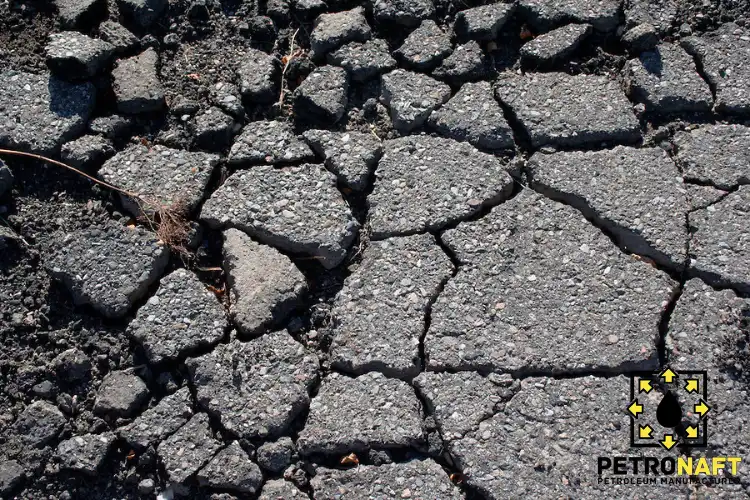
If Mixed Bitumen in Asphalt ends up in your job unintentionally—different grades, crude sources, modifiers, or recycled binder fractions blended without a compatibility plan—the pavement can fail early through cracking, rutting, raveling, or moisture damage. The fix is mostly preventable: tight tank/line control, compatibility screening, and performance-based binder testing before the mix leaves the plant.
Highlights & Key Sections
Why “mixed bitumen” becomes a real problem (not just a paperwork issue)
Mixing bitumen isn’t automatically wrong—refiners and terminals blend binders every day. The risk starts when the blend happens without control or when you mix materials that don’t “play nice,” such as:
Two binders with different performance grades (PG) or viscosity targets
Different modifier systems (ex: SBS vs EVA, or unknown polymers)
Bitumen with very different chemical balance (asphaltenes/maltenes)
High RAP/RAS contribution plus a soft virgin binder, but no blending design
Cross-contamination from tanks, lines, pumps, or transport
In the field, the pavement doesn’t care what the delivery note says—it responds to the final rheology and stability of the binder film coating the aggregate.
Mixed Bitumen in Asphalt: what it really means in practice
In asphalt plants and projects, “mixed bitumen” usually shows up in one of four ways:
Accidental mixing
Leftover binder in a tanker or line flush
Wrong tank selected
Shared loading arms without proper purge
Uncontrolled blending
“Let’s soften it” or “let’s stiffen it” decisions made on the fly
No documented blend ratio, no verification testing
Hidden mixing via recycled binder
RAP/RAS changes daily → effective binder grade shifts
The virgin binder may be correct, but the total binder isn’t
Compatibility failure
The blend looks fine hot, then separates or becomes brittle after aging
Polymer phase separation or poor storage stability
What failures look like when mixed bitumen is the root cause
Mixed binder issues don’t have one signature. They often appear as “mysterious variability”—good one day, bad the next, with the same mix design on paper.
Common failure modes (field symptoms)
Early fatigue cracking (alligator cracking sooner than expected)
Thermal cracking (transverse cracks in cooler periods)
Rutting and shove (especially at intersections and slow lanes)
Raveling (loss of aggregate, “dry-looking” surface)
Stripping/moisture damage (loss of bond, potholes, wet-weather breakup)
Bleeding/flushing (over-soft behavior under heat and traffic)
Why it happens (mechanisms that matter)
The binder becomes too stiff or too soft for the climate and traffic
The binder film becomes brittle after short-term aging
The blend shows poor colloidal stability (separation/segregation)
Polymer networks break down or separate, changing performance drastically
Adhesion to aggregate changes (especially in moisture-sensitive systems)
Fast diagnostic table: “Is mixed binder likely involved?”
| What you see on the road | When it shows up | Mixed-binder clue | What to check first |
|---|---|---|---|
| Cracking appears “too soon” | Months–1 year | Batch-to-batch variability | Compare binder test results by delivery date |
| Rutting despite “correct” gradation | Hot season / slow lanes | Binder unexpectedly soft | Verify PG/viscosity + RAP% variability |
| Raveling in patches, not uniform | Early life | Poor coating or brittle film | Plant temps, binder handling, short-term aging sensitivity |
| Moisture damage in one production window | After rain | Adhesion shift due to blend | Stripping tests + aggregate moisture + binder type changes |
| Same design, different compaction feel | During paving | Workability swings | Binder viscosity curve + mix temperature history |
A realistic field example (composite case)
A contractor paves a logistics access road with heavy truck loads. Week 1 performs well. Week 2, the crew reports the mix feels “greasier” in the screed, density is easier to hit, and within a hot month rutting begins at the gate area.
The root cause wasn’t “bad compaction.” The plant had switched to a different binder source due to supply pressure, and a partial tank was topped up. The blend reduced high-temperature stiffness while RAP percentage also drifted. With no hold-point testing, the project received a binder system that behaved like a softer grade under load.
The takeaway: mixed binder problems often look like workmanship issues—until you line up production dates, delivery batches, and performance tests.
Mini tutorial: 30–60 minute plant-side screening when you suspect mixed bitumen
You can’t do full rheology in the plant yard, but you can stop the bleeding with a simple routine.
Step 1: Lock the batch history (10 minutes)
Identify which tank fed which production window
Pull delivery tickets for that window
Record binder temperature history (storage + pumping)
Step 2: Take two samples, not one (10 minutes)
Sample from:
Circulation line / sample valve, and
Tank top vs bottom (if safe and practical)
Why: if separation is happening, one sample can lie.
Step 3: Do quick consistency checks (10–20 minutes)
Visual: haze, “stringiness,” unusual odor, sediment
Rapid viscosity check (if available) or compare pumping behavior at same temp
Simple “hot plate smear” consistency comparison between samples
Step 4: Trigger a hold-point (immediately)
If anything looks inconsistent:
Stop topping up tanks
Quarantine the suspect tank and any mix produced in that time window
Send samples to a lab for performance testing (DSR/BBR/softening point/penetration as required)
The compatibility problem: when “meets grade” still fails
A blended binder can meet a headline grade and still cause failures if it has:
Poor storage stability (separates in tank)
High aging susceptibility (stiffens too fast after mixing)
Nonlinear behavior (rutting resistance drops rapidly with small changes)
Modifier incompatibility (polymer phase separation)
This is why buyers and agencies increasingly push toward:
Performance-based acceptance, not only traditional grade claims
Better traceability and digital QC records
More binder testing when RAP percentages rise (a growing global trend)
Practical prevention: the controls that actually stop mixed-binder failures
1) Procurement controls (buyers and project owners)
Specify binder by performance grade + modifier type (if relevant)
Require a clear Certificate of Analysis per delivery batch
Require traceability: tank ID, loading terminal, time, and product code
Add a contract hold-point: no switching source mid-lot without approval
Good commercial rule: if the job is sensitive (heavy traffic, extreme climate, thin lifts), treat binder supply changes like a design change.
2) Terminal and storage controls (the “boring” stuff that saves projects)
Dedicate tanks by product type where possible
Use written SOPs for:
line flush
tanker heel management
switching tanks
Maintain correct storage temperatures (avoid overheating and extended dwell time)
Ensure circulation is adequate to prevent stratification
3) Plant controls (where accidental mixing usually happens)
Label tanks and valves clearly (physical + digital)
Interlock systems (if available) to prevent wrong-tank feeding
Track binder usage against inventory daily (spot anomalies fast)
Treat RAP feed variability as a binder variability driver, not only an aggregate issue
What to test: a smart, job-sized testing plan (not overkill)
Different projects need different rigor. Here’s a practical framework that scales.
Testing menu (choose based on risk)
| Project risk level | Typical examples | Suggested binder verification |
|---|---|---|
| Low | light traffic, mild climate | basic consistency + COA verification |
| Medium | city streets, standard overlays | PG verification + aging sensitivity checks |
| High | highways, ports, logistics, airports | full performance suite + compatibility/stability screening |
Compatibility screening that pays off
-
Test the actual blend ratio you will use (including RAP/RAS contribution estimates)
-
Include at least one aging step to reveal brittleness risk
-
If polymer-modified binders are involved, include a storage stability check
“Avoid it” checklist: tank-to-truck-to-paver controls
Before delivery arrives
-
✅ Confirm tank has enough free volume (avoid topping up unknown heels)
-
✅ Confirm product code, grade, and intended tank assignment
-
✅ Confirm whether the tank previously held a different binder
During unloading
-
✅ Sample the delivery and label it with time + tank ID
-
✅ Log temperatures and unloading time
-
✅ If switching binder source, create a documented change event
During production
-
✅ Track RAP percentage and moisture daily
-
✅ Monitor workability swings as a process signal, not “crew feel”
-
✅ If mix behavior changes, quarantine and test before continuing
If mixed binder is suspected
-
✅ Stop blending and stop topping-up tanks
-
✅ Take top/bottom + circulation samples
-
✅ Quarantine the production window
-
✅ Run performance verification before paving more tonnage
Executive Summary
-
Mixed Bitumen in Asphalt becomes dangerous when blending is accidental, uncontrolled, or incompatible—especially with varying RAP/RAS and modified binders.
-
Failures show up as variability: rutting, cracking, raveling, stripping, or sudden workability changes.
-
The best prevention is operational discipline (tanks/lines/traceability) plus a right-sized testing plan that verifies the actual binder system going into the mix.
-
If you suspect a problem, act fast: quarantine, sample top/bottom, and verify performance before laying more material.
FAQ
1) Is mixing two bitumen grades always bad?
Not always—controlled blending can be valid. The risk is uncontrolled or undocumented blending, especially when modifiers or recycled binder fractions make the final performance unpredictable.
2) What’s the fastest warning sign on site?
Sudden changes in workability, compaction feel, or surface texture within the same “design” are big flags—especially if the binder source, tank, or RAP percentage changed.
3) Can RAP make a binder “mixed” even if the virgin binder is correct?
Yes. RAP/RAS introduces aged binder that shifts the total binder stiffness and cracking resistance. If RAP content varies, the effective binder grade can drift day to day.
4) Why do polymer-modified binders have higher mixing risk?
Different polymers and base binders can be incompatible, and some systems separate during storage. A binder can look fine hot but lose performance after separation or aging.
5) What should a buyer require to reduce risk without slowing supply?
Batch traceability, clear COA per delivery, documented change control for source switches, and a simple hold-point test plan for high-risk projects (heavy traffic, thin lifts, extremes of temperature).
Sources
-
Asphalt Institute manual on asphalt mix and binder fundamentals, handling, and performance concepts: Asphalt Institute (MS-2 / related manuals) — https://www.asphaltinstitute.org/
-
Widely used U.S. highway authority references on asphalt materials, construction practices, and performance considerations: FHWA Asphalt Pavement resources — https://www.fhwa.dot.gov/pavement/asphalt/
-
Global research and peer-reviewed proceedings covering asphalt binder performance, modifiers, and recycled materials: Transportation Research Board (TRB) / TRID — https://trid.trb.org/
-
Core performance-grading and asphalt binder testing standards used internationally in specifications and acceptance: AASHTO Standards (binder PG / related tests) — https://www.transportation.org/
-
International standards library for bitumen and asphalt test methods (penetration, softening point, viscosity, etc.): ASTM Standards for Asphalt Binder Testing — https://www.astm.org/