


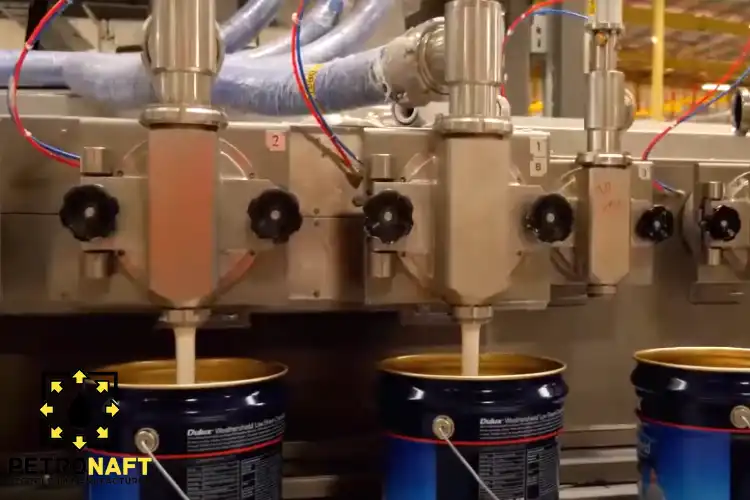
Paraffin Wax for Ink & Paint improves surface slip, rub/scuff resistance, anti-blocking, and—when used as emulsions or micronized powders—helps control scratch/mar behavior and water beading without major reformulation. The right wax grade and particle form can reduce print defects, boost coating durability, and protect gloss or intentionally soften it for a silky-matte finish.
Ink and paint buyers typically want three things at once: performance, process stability, and consistent supply. Paraffin wax can deliver all three—if you match it to the binder system, application method, and end-use conditions.
In this guide, you’ll learn how to:
- Pick the right paraffin wax type (and when not to use it)
- Dose it correctly for different ink and coating systems
- Avoid common defects like haze, craters, poor intercoat adhesion, or unstable viscosity
- Write a purchase spec that prevents “same name, different wax” surprises
Highlights & Key Sections
Paraffin Wax for Ink & Paint: What it actually does in the film
Paraffin wax works differently from most additives. Instead of “staying dissolved,” it often migrates toward the surface during drying/curing and forms a microscopic lubricating layer. That’s why small dosage changes can create big shifts in rub resistance and slip.
Core functions you can expect (when selected correctly)
- Slip / lower coefficient of friction: Helps sheets, labels, and coated parts slide instead of scuffing.
- Rub & scuff resistance: Reduces abrasion marks on high-speed packaging lines and stacked prints.
- Anti-blocking: Prevents freshly printed/coated surfaces from sticking together under pressure/heat.
- Scratch & mar improvement (often as blends): Adds surface protection—especially when paired with harder waxes.
- Water beading / moisture resistance (best via emulsions): Useful for some packaging, wood, and exterior coatings.
- Gloss control: Can maintain gloss at low loads or create a controlled satin/matte effect at higher loads (system-dependent).
Quick map: property → ink vs paint impact
| What you tune | In inks | In paints/coatings | Practical note |
|---|---|---|---|
| Wax hardness | Better scuff resistance | Better mar resistance | Too hard can reduce adhesion or create haze |
| Melting point | Heat resistance on press/line | Block resistance & heat stability | Higher melt usually = better hot-blocking performance |
| Particle size | Print smoothness & clarity | Surface feel and uniformity | Coarse particles can raise haze or grit |
| Polarity/compatibility | Dispersion stability | Defect control (craters, fish-eyes) | Compatibility matters more than “wax name” |
Types of wax used in inks and paints (and where paraffin fits)
“Wax” is a category, not a single material. In practice, formulators choose among paraffin and several alternatives depending on hardness, melt point, and compatibility.
Common options and how they compare
| Wax type | Typical strengths | Typical trade-offs | Best-fit uses |
|---|---|---|---|
| Fully refined paraffin wax | Clean odor/color, stable quality, good slip/anti-block | Can be softer than PE/FT waxes | High-quality inks, clear coats, packaging where cleanliness matters |
| Semi-refined paraffin wax | Cost-effective, decent slip | More odor/color risk vs fully refined | Budget inks/coatings where aesthetics are less critical |
| Micronized paraffin wax (powder) | Easy dosing, fast rub/slip improvement | Can haze at higher loads; needs good dispersion | Flexo/gravure inks, OPV/topcoats, industrial coatings |
| Paraffin wax emulsion (water-based) | Water beading, slip in waterborne systems | Freeze-thaw sensitivity; pH/shear dependent | Water-based inks, waterborne paints, primers |
| Microcrystalline wax | Tougher, more flexible film | Higher viscosity impact in some systems | Heavy-duty coatings, specialty inks, blends |
| Polyethylene (PE) wax | High scratch/mar resistance | Can reduce clarity; needs good wetting | High-performance coatings, wear-resistant inks |
| Fischer–Tropsch (FT) wax | Very hard, high melt, strong block resistance | Can be brittle; compatibility critical | Hot-block control, industrial topcoats, some UV/OPV systems |
Rule of thumb:
If you need clean slip + anti-block without turning the film brittle, fully refined paraffin (often micronized) is usually the first stop. If you need maximum scratch/mar or high-temperature block resistance, paraffin often becomes part of a blend rather than the only wax.
Where paraffin wax shines in printing inks
Paraffin wax is popular in inks because it gives measurable improvements at low addition levels—especially in packaging and publication where rub/scuff complaints can create costly rejects.
Best-fit ink systems
- Flexo & gravure (packaging): Improves scuff resistance on film and paper, supports stacking, reduces blocking.
- Offset (sheet-fed and heatset): Helps with anti-setoff and rub, especially in high-speed finishing.
- Overprint varnishes (OPV): Fine-tunes slip and abrasion without heavy resin changes.
- Water-based inks: Paraffin emulsions can add slip and water beading (when stable in the system).
- UV/energy-curable inks & coatings: Micronized waxes can help mar resistance; compatibility testing is non-negotiable.
Mini tutorial: adding micronized paraffin wax to a solvent-based ink (practical workflow)
- Choose particle size deliberately: Use finer wax for clarity-sensitive work; use slightly larger particles for maximum rub.
- Pre-wet the wax: Mix wax powder with a portion of the vehicle/resin solution to prevent floating and clumps.
- High-shear dispersion: Add under strong agitation; avoid dumping all at once.
- Control temperature: Warm the batch slightly if your system allows—helps wetting and consistency.
- Check filtration & plate/roller behavior: Poor dispersion shows up as filter plugging or plate buildup.
- Test rub and COF early: Run a quick drawdown + rub test before scaling.
Real-world production example (typical pattern)
A flexible packaging converter sees scuffing during rewinding and carton packing. A small addition of micronized paraffin wax into the ink or OPV often:
- reduces rub marks on dark solids,
- improves stacking behavior,
- cuts rework caused by abrasion in handling.
The “win” usually comes from getting the wax into the surface zone—which depends on wax type, particle size, and drying profile.
Ink troubleshooting table (fast diagnosis)
| Symptom | Likely cause | What to adjust |
|---|---|---|
| Haze / loss of clarity | Wax too coarse or overdosed | Reduce dose; switch to finer micronized wax |
| Poor ink adhesion | Wax migration too strong | Lower wax; use harder blend; verify substrate treatment |
| Plate/roller buildup | Dispersion instability | Improve wetting; pre-disperse; check compatibility |
| Blocking still happens | Wax melt point too low for heat/pressure | Move to higher melt paraffin or blend with harder wax |
| Rub improved but gloss dropped | Wax at surface too high | Reduce wax or use wax with better gloss retention |
Paraffin wax in paints and coatings: slip, feel, water beading, and block resistance
In coatings, paraffin wax is often used as emulsions (waterborne) or micronized/dispersed waxes (solventborne and specialty) to control surface properties without redesigning the binder package.
Where it’s most useful
- Waterborne acrylic paints: Paraffin emulsions can improve water beading, anti-blocking, and surface slip.
- Wood coatings: Helps reduce marring and improves “hand feel,” especially in satin/matte finishes.
- Industrial topcoats: Supports anti-scratch and anti-scuff performance—commonly as a blend with harder waxes.
- Primers and sealers: Can reduce tack and blocking during stacking/packing.
Mini tutorial: selecting paraffin wax form for a water-based paint
- Prefer an emulsion for waterborne systems (powder wax is harder to stabilize).
- Check stability factors: pH range, electrolyte tolerance, freeze–thaw stability, and shear stability.
- Add late in the grind (often post-letdown) to protect particle integrity.
- Run quick defect screens: crater/fish-eye, leveling, and recoat adhesion.
- Confirm block resistance under heat: Stack panels with weight at elevated temperature to simulate real storage.
Practical caution (where paraffin can backfire)
Paraffin’s surface activity is powerful. In some coatings it can:
- reduce intercoat adhesion (especially if recoated after full migration),
- create surface defects if incompatible (craters, separation),
- soften the surface if the wax is too low-melt for the environment.
Coatings troubleshooting table
| Issue | Why it happens | Fix |
|---|---|---|
| Fish-eyes / craters | Compatibility issue or surface tension disruption | Change wax type; reduce dose; add compatible wetting strategy |
| Poor recoat adhesion | Wax layer at surface reduces bonding | Lower wax; recoat window guidance; use alternative wax blend |
| Soft surface / print marks | Melt point too low for service temp | Higher melt paraffin or blend with harder wax |
| Uneven matte / streaks | Wax not uniformly distributed | Improve mixing order; use stabilized emulsion; check shear |
How to choose the right grade fast (buyer + formulator checklist)
Instead of buying “paraffin wax” as a generic commodity, purchase it like a performance additive. Two waxes with the same label can behave very differently.
A practical selection workflow
- Start with your system: water-based vs solvent-based vs UV
- Pick the delivery form: emulsion, dispersion, or micronized powder
- Target the performance: rub/scuff, slip, anti-block, water beading, matte control
- Set guardrails: clarity, odor, color, food-contact documentation (if applicable), and consistency lot-to-lot
- Validate with 3 tests: rub/scuff, blocking, and adhesion (including recoat if relevant)
Purchase spec table (what to request and why)
| Parameter | Why it matters in Ink & Paint | Typical reference tests/specs |
|---|---|---|
| Melting point / congealing behavior | Heat resistance, block resistance, surface durability | Common industry methods for petroleum wax melting point |
| Needle penetration (hardness) | Rub/scuff, mar resistance, “feel” | Needle penetration methods for wax hardness |
| Oil content | Odor, migration behavior, film cleanliness | Oil content testing for petroleum wax |
| Color & odor | Print cleanliness, white coatings, sensitive packaging | Color and odor evaluation methods used in wax specs |
| Flash point (for solvent systems) | Handling safety in manufacturing | Standard flash point methods |
| Particle size (micronized wax) | Clarity, smoothness, rub efficiency | Supplier PSD/mesh specs |
| Solids & pH (emulsions) | Stability, dosing accuracy | Supplier COA + stability data |
| Compatibility guidance | Prevents craters, separation, haze | Supplier application notes + your lab screening |
Tip: For inks and clear/topcoat applications, prioritize consistent particle size and clean odor/color as much as melting point.
Trends that matter right now (and why they change wax choices)
Two shifts are reshaping wax selection for inks and coatings:
- More water-based and low-VOC systems: Brands and converters increasingly move toward waterborne inks/OPVs and low-VOC coatings. That raises the value of stable wax emulsions and additive packages that don’t destabilize viscosity or foam.
- Higher durability demands on thinner films: Lightweight packaging, faster lines, and thinner coatings mean less “material buffer.” Waxes that deliver rub resistance at low film weights—without killing gloss or adhesion—have become more important.
Cost–performance: how to justify the wax choice in numbers
Waxes look cheap per kilogram, but their ROI comes from reducing defects and downtime. Here’s a simple way to quantify value:
- Scrap reduction: (Rejected meters/sheets) × (material + labor)
- Line efficiency: Faster rewinding/stacking due to fewer scuffs
- Complaint cost avoidance: Returns, reprints, and reputation risk
- Simplification: Sometimes wax lets you reduce reliance on heavier OPVs or over-engineered resin packages
Even a small, well-chosen wax addition can pay back if it prevents a single production hold or customer claim.
Conclusion
Used with intention, Paraffin Wax for Ink & Paint is a practical, scalable way to improve slip, rub/scuff resistance, anti-blocking, and selective water beading—often without changing your primary resin system. The best results come from matching wax type, melting point, hardness, and particle form to the ink/coating chemistry and the real-world handling conditions.
Executive Summary Checklist (print this for your lab and purchasing team)
- Define the target: slip, rub/scuff, anti-block, matte control, water beading
- Choose the right form: micronized powder (solvent/OPV), emulsion (waterborne), dispersion (specialty)
- Set performance constraints: clarity, gloss, odor, color, recoat adhesion
- Specify key properties: melting point, penetration (hardness), oil content, particle size, solids/pH (for emulsions)
- Validate in your system: rub/scuff + blocking + adhesion (and recoat if needed)
- Confirm production behavior: filtration, stability over time, foam sensitivity (waterborne)
- Lock in supply consistency: COA requirements and lot-to-lot control
FAQ
1) Will paraffin wax reduce gloss in inks or clear coats?
It can, especially if particle size is too large or dosage is high. Use finer micronized wax and dose conservatively when clarity and gloss are critical.
2) Is paraffin wax compatible with water-based paints?
Yes, typically as a paraffin wax emulsion. Stability depends on pH, electrolyte tolerance, and shear; always run storage and freeze–thaw checks if relevant.
3) What’s the difference between paraffin wax and PE wax in coatings?
Paraffin generally delivers excellent slip and anti-blocking, while PE wax often brings higher scratch/mar resistance. Many high-performance systems blend them to balance properties.
4) Can wax hurt adhesion or recoatability?
It can if it migrates strongly to the surface. Reduce dosage, use a more compatible wax, or set a recoat window based on your testing.
5) What’s a typical starting dose range?
It varies by system, but wax additives often start low and are optimized through rub/block/adhesion tests. Start small, test, then move in controlled increments.
Sources
- Practical guide explaining wax emulsions and wax surface modifiers in coatings and inks, including performance roles. SpecialChem – Wax Emulsions for Coatings
- Authoritative reference page listing standard test parameters commonly used to specify petroleum wax properties. ASTM – Petroleum Wax
- Established chemical reference work covering wax families, properties, and industrial applications including coatings and inks. Wiley – Waxes (Major Reference Works)