

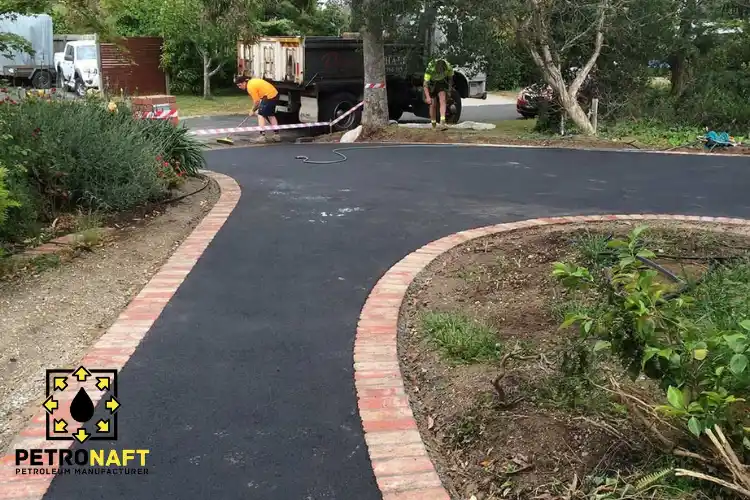
Bitumen For Driveways gives you a smooth, flexible, black surface that’s cheaper than concrete, fast to install, and lasts 15–25 years when built on a strong base and maintained correctly. It’s a smart choice if you want strong curb appeal, resilient performance, and simple, low-disruption repairs over time.
Highlights & Key Sections
Why homeowners choose bitumen for driveways
When people say “bitumen driveway,” they usually mean a hot asphalt mix where bitumen is the black binder that glues aggregate together. The result is the familiar dark driveway you see on most roads and many homes, engineered to carry cars, light trucks, and delivery traffic for decades with proper care.
Key reasons people pick bitumen over other options:
-
Lower upfront cost than concrete or pavers
-
Fast installation and quick return to use
-
Flexible surface that tolerates minor ground movement
-
Easy to repair locally without replacing the whole drive
What bitumen actually does in a driveway
Bitumen is a petroleum-based binder. Mixed with graded stone, sand, and mineral fillers, it creates asphalt – a dense, load-bearing pavement that resists traffic and weather.
A standard bitumen driveway is built in layers:
Typical bitumen driveway structure
| Layer | Typical thickness* | Main role |
|---|---|---|
| Subgrade (soil) | – | Compacted natural ground, shaped for drainage |
| Granular sub-base | 100–200 mm | Spreads loads, protects against frost and soft spots |
| Base course (asphalt) | 50–80 mm | Structural strength for vehicles |
| Surface course | 25–40 mm | Smooth finish, skid resistance, weather protection |
*Ranges vary with climate, soil, and traffic.
A good driveway design spends as much attention on the hidden layers and drainage as on the black surface you see.
Advantages and limitations of bitumen driveways
Core advantages
-
Cost-effective: Typical installed costs for residential asphalt driveways are roughly $3–$7 per sq ft in many markets, though some regions now see $7–$13 per sq ft due to higher labor and material costs.
-
Fast construction: Many single-home driveways can be completed in 1–2 days plus curing time, with less disruption than concrete.
-
Comfort and performance: Slightly softer surface means less tire noise and more comfort when walking or kids playing.
-
Repairable: Cracks, potholes, and depressions can often be cut out and patched without redoing the entire driveway.
Key limitations
-
Lifespan vs concrete: A well-designed, well-maintained asphalt driveway typically lasts 15–20 years, sometimes up to 25–30 years with excellent care; concrete of similar quality often runs 30–40+ years.
-
Maintenance demand: Expect periodic crack sealing and resealing every few years. Neglect can cut life in half.
-
Heat sensitivity: In hot weather, the surface softens slightly and can scuff if you turn the wheel while stationary or use kickstands without pads.
-
Oil and chemical damage: Fuel and oil spills can soften bitumen and should be cleaned promptly.
Quick comparison: bitumen vs other driveway surfaces
| Material | Typical lifespan* | Installed cost (approx) | Maintenance level | Best suited for |
|---|---|---|---|---|
| Bitumen/asphalt | 15–25 years | $3–$13 / sq ft | Medium (sealing) | Most residential driveways |
| Concrete | 30–40+ years | $4–$18 / sq ft | Low–medium | Long-term, rigid, premium look |
| Pavers | 25–50+ years | $10–$30 / sq ft | Medium (weed, joints) | High-end custom designs |
| Gravel | 5–10+ years | $1–$3 / sq ft | High (raking, topping up) | Rural/long drives with budget focus |
*Assumes proper design and maintenance.
Is a bitumen driveway right for your property?
Bitumen works best when these conditions are met:
-
Traffic: Cars, light trucks, occasional delivery vans – not constant heavy lorries.
-
Climate: Performs very well in temperate and cold climates; in extremely hot regions, polymer-modified mixes help reduce rutting and softening.
-
Soil: Reasonably stable subgrade or properly improved base; soft clays may require extra thickness or stabilization.
-
Drainage: You can slope the driveway 2–3% away from buildings and manage water at the street or soakaways.
Bitumen may not be ideal if you:
-
Want a completely maintenance-free surface
-
Expect frequent heavy truck traffic
-
Need a light-colored, highly decorative finish with intricate patterns
Step-by-step guide to a durable bitumen driveway
Here’s a homeowner-level version of the professional 7-step asphalt pavement process adapted for driveways.
-
Site evaluation and design
-
Measure area, note slopes, utilities, and access.
-
Decide where water should go (gullies, swales, drains).
-
-
Demolition and removal (if needed)
-
Break and remove old concrete, asphalt, or pavers.
-
Haul waste to recycling where possible.
-
-
Grading and drainage setup
-
Shape the ground for a 2–3% cross-fall away from buildings.
-
Install drains or channels if water would otherwise pond.
-
-
Sub-base and base preparation
-
Place crushed stone or road base in layers, compact each pass.
-
Proof-roll with a loaded truck or roller to find and correct soft spots.
-
-
Binder/base asphalt layer
-
Lay a thicker, coarser asphalt layer to provide structural strength.
-
Compact with steel and (if needed) pneumatic rollers.
-
-
Surface course (wearing course)
-
Lay finer asphalt mix for a smooth, tight finish.
-
Compact quickly while it’s still hot to lock in density.
-
-
Curing and first-week care
-
Keep vehicles off for 24–72 hours depending on temperature.
-
Avoid sharp turns while stationary and heavy point loads for a few weeks.
-
Cost of bitumen driveways in 2025: what to budget
Actual pricing varies widely by country and region, but current data gives reliable ballpark ranges:
-
Standard residential driveway:
-
$3–$7 per sq ft in many markets, including materials and labor
-
Some urban or high-cost areas: $7–$13 per sq ft or more, especially when excavation and drainage upgrades are needed
-
-
Material-only benchmarks: asphalt mix typically $5–$7 per sq ft equivalent, or $100–$200 per ton depending on type and region.
Example cost snapshot (approximate)
| Driveway size | Area (sq ft) | Low estimate | High estimate |
|---|---|---|---|
| Small single | 300 | $900 | $3,900 |
| Typical home | 600 | $1,800 | $7,800 |
| Large semi-circle | 1,000 | $3,000 | $13,000+ |
These ranges assume straightforward access. Steep slopes, poor soil, complex shapes, or extensive drainage can add 20–50%.
Design, finish and sustainability trends in bitumen driveways
Bitumen driveways are not just plain black strips anymore. Several trends matter if you’re planning a new surface in 2024–2025:
-
Eco-friendly mixes: Warm-Mix Asphalt (WMA) can cut production temperatures and emissions by around 20–40%, and is moving from highways into residential work.
-
Recycled asphalt (RAP): Many suppliers now include reclaimed asphalt pavement in mixes, sometimes up to 50% or more, maintaining performance while reducing raw material use and cost.
-
Polymer-modified bitumen (PMB): Polymers improve rutting resistance, cracking behavior, and overall durability, which is especially helpful on steep drives or hot climates.
-
Decorative options: Stamped or colored asphalt overlays mimic stone or brick patterns at lower cost than full pavers.
If sustainability and style are priorities, ask contractors specifically which of these technologies they offer and how they’re tested locally.
Maintenance plan: keeping your bitumen driveway in top shape
A bitumen driveway’s lifespan is heavily influenced by maintenance. A simple plan looks like this:
Every month
Inspect for fresh cracks, oil spills, and blocked drains.
Sweep off leaves, soil, and debris that trap moisture.
Every year
Clean and fill hairline and small cracks with a compatible crack sealant.
Check edges where asphalt meets soil or grass; re-support if edges start crumbling.
Every 2–3 years
Apply a quality sealcoat to protect against UV, water, and oils (unless your climate or local standards recommend a different interval).
After major storms or freeze–thaw cycles
Re-check for ponding, heaving, or new cracking and schedule patching promptly.
Well-maintained asphalt pavements consistently show lifespans at the upper end of the 15–20+ year range reported in recent maintenance studies and contractor data.
Common problems with bitumen driveways and how to fix them
| Issue | Likely cause | Practical fix (homeowner view) |
|---|---|---|
| Hairline cracks | Normal aging, slight shrinkage | Clean, dry, fill with crack sealer |
| Alligator cracking | Weak base, overloads, water damage | Cut out area, repair base, patch with hot mix |
| Potholes | Water infiltration + traffic | Saw-cut edges, rebuild base, compact hot-mix patch |
| Surface rutting | Heavy loads, hot climate, mix/base too weak | Mill and replace rutting zone, consider PMB mix |
| Edge crumbling | No lateral support, vehicle overhang | Add shoulder support, patch edges |
| Oil/fuel soft spots | Spills dissolving binder | Treat stain, remove softened asphalt, patch locally |
Proper design and timely maintenance are cheaper than repeated reactive repairs. Many of the above are preventable with good base, drainage, and sealcoating.
Choosing a contractor for a bitumen driveway
Because design and workmanship make or break performance, contractor selection is critical:
Check technical competence
Ask how they design base thickness for your soil and climate.
Request references for driveways 5+ years old you can actually see.
Clarify scope and specs
Written quote should state layer thicknesses, mix type, compaction method, and drainage elements.
Confirm who handles permits and inspections where required.
Ask about materials and trends
Do they offer recycled content, WMA, or polymer-modified mixes?
Can they provide material certifications or supplier data sheets?
Understand warranty and aftercare
Typical workmanship warranties range from 1–5 years; clarify what’s covered.
Ask for a written maintenance schedule tailored to your driveway.
Bitumen For Driveways: quick decision checklist
Use this checklist before signing any contract:
My traffic is mainly cars/light trucks, not constant heavy lorries.
Drainage is planned so water runs off the driveway and away from buildings.
The quote specifies base thickness, asphalt layers, and compaction equipment.
I understand the expected lifespan (15–25 years) and required maintenance (crack filling, sealing).
I’ve compared costs with concrete and pavers and bitumen still fits my budget and goals.
I asked about modern options like recycled asphalt, polymer-modified mixes, or WMA for better durability and sustainability.
The contractor provided references for older driveways and a clear written warranty.
If you can tick most boxes, you’re in a good position to proceed with Bitumen For Driveways confidently.
FAQ: bitumen driveways
1. How long does a bitumen driveway really last?
Most residential bitumen/asphalt driveways last 15–20 years, and with high-quality base, drainage, and regular sealing, many reach 20–25 years or more. Poor construction or no maintenance can cut that to 10–12 years, so workmanship and upkeep are crucial.
2. Is bitumen cheaper than concrete for driveways?
Generally yes. Recent cost data shows asphalt driveways often installed at roughly $3–$7 per sq ft, while concrete frequently runs higher on a like-for-like basis and can climb further with decorative finishes. However concrete may last longer, so compare life-cycle cost, not just initial price.
3. Can I lay bitumen over my existing driveway?
Sometimes. If the old surface is asphalt in good structural condition, an overlay can work after crack repair and tack coating. Over failing asphalt or cracked concrete, professionals usually mill or break out weak areas and rebuild the base first to avoid reflecting cracks.
4. How often should a bitumen driveway be sealed?
In many climates, a 2–3-year sealcoating cycle is recommended to protect against UV, water, and oil, though low-sun or low-traffic areas may stretch that interval. The surface should be structurally sound and clean before sealing; sealing is not a fix for deep structural problems.
5. Is a bitumen driveway environmentally friendly?
Bitumen pavements are highly recyclable; reclaimed asphalt is routinely reused in new mixes, and warm-mix plus polymer technologies further cut energy use and extend service life. For many residential projects, a modern bitumen driveway with RAP and WMA has a competitive environmental profile versus alternative materials, especially when designed for long life.
Sources
This Old House – Asphalt Driveways Guide – Practical homeowner guide to planning, installing, and maintaining asphalt driveways, including lifespan and basic maintenance practices. Read overview
Precision General Contracting – 2024 Driveway Cost Guide – Summarizes current installed cost ranges for asphalt and competing driveway materials based on recent market data. View cost guide
Asphalt Institute – Maintenance & Rehabilitation Resources – Industry-standard references on asphalt driveway design, maintenance techniques, and preservation strategies. Explore maintenance information
NAPA – Sustainable Asphalt Pavements: A Practical Guide – Explains how RAP, WMA, and mix design choices improve sustainability and lifecycle performance of asphalt pavements. Download practical guide
MDPI – Warm-Mix Asphalt Containing Reclaimed Asphalt Pavement – Peer-reviewed study showing performance and environmental benefits of WMA with high RAP content, relevant to modern driveway mixes. Read research article