

Slack wax is the refinery by-product that most commercial paraffin waxes are built on. In Paraffin Manufacturing, slack wax is the key feedstock that, once deoiled, decolorized, and finished, determines yield, purity, cost, and performance. The right slack-wax grade and process window are therefore crucial for competitive, consistent paraffin production.
Highlights & Key Sections
What is slack wax and how does it fit into Paraffin Manufacturing?
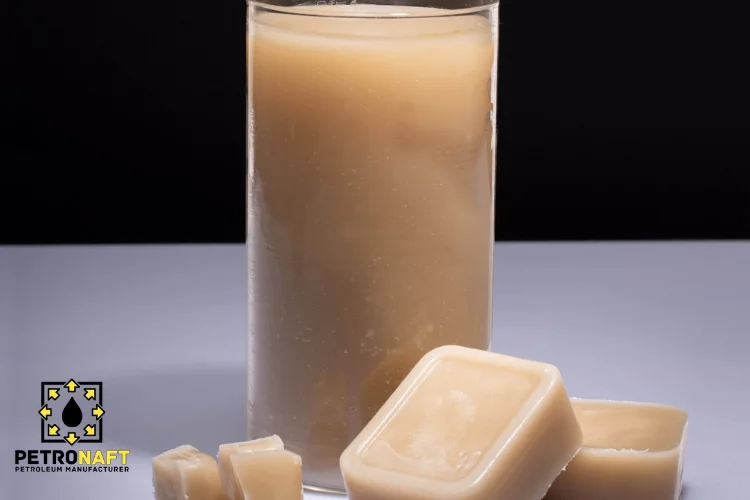
Slack wax is a semi-solid mixture of crystalline paraffin hydrocarbons and lubricating oil, typically containing 5–30% oil with a melting point of about 45–65°C. It is produced when lube distillates are solvent-dewaxed to meet base-oil pour-point specifications; the cold, wax-rich cake leaving the filter is slack wax.
From there, slack wax becomes the primary crude feedstock for paraffin wax. Deoiling, hydrotreating, and bleaching progressively remove oil, aromatics, and color bodies to deliver semi-refined and fully refined paraffin grades for candles, packaging, board sizing, rubber, and cosmetics.
How is slack wax generated in lube oil refining?
At a typical fuels & lube refinery:
Crude oil is vacuum-distilled to separate lubricating fractions.
These fractions are solvent-extracted to remove aromatics and then sent to solvent dewaxing units (MEK–toluene, MEK–MIBK, propane, or similar systems).
The chilled slurry is filtered or centrifuged; the filtrate becomes base oil, while the filter cake is slack wax containing residual oil and soft, low-melt components.
Most slack wax still comes from Group I and II base-oil refineries, because modern hydroisomerization routes (Group III/IV) convert wax into isomerized base oil instead of producing solid wax streams.
What are the typical properties of slack wax versus paraffin wax?
| Property | Slack wax (typical) | Semi-refined paraffin | Fully refined paraffin |
|---|---|---|---|
| Oil content (wt%) | 5–30 (can reach 40) | 0.5–5 | <0.5 |
| Melt / congealing point (°C) | 45–65 | 50–65 | 52–68 |
| Color | Brown to yellow | Off-white | White, water-clear when molten |
| Odor / purity | Noticeable hydrocarbon odor | Moderate | Very low odor, high purity |
| Typical use | Feedstock, rust-preventive oils | Industrial candles, board wax | Food, pharma, premium candles |
These ranges are indicative; each refinery will publish precise specifications by grade and origin.
How does slack wax flow through the Paraffin Manufacturing process?
In a paraffin plant integrated with a lube refinery, the path is usually:
Slack-wax reception and storage
Solvent deoiling / sweating (oil removal)
Hydrotreating / hydrogenation (purification)
Bleaching, filtration, and finishing
Blending and pelletizing / slab casting
Each step can be optimized to trade off yield vs. quality vs. energy consumption.
How is slack wax deoiled in practice?
Most industrial plants use solvent deoiling:
Slack wax is mixed with a selective solvent (commonly MEK–toluene, MEK–MIBK, propane, or n-paraffins).
Solvent ratio is typically 3–5 volumes solvent per volume of slack wax for good filtration performance.
The mixture is cooled to –10 to –20°C to crystallize high-melting paraffin while keeping oil in solution.
Crystallized wax is separated on rotary drum filters or pressure filters and washed with cold solvent.
The cake is stripped of solvent, yielding deoiled wax; filtrate and wash streams go to distillation for solvent recovery and oil by-product.
Older units may still use sweating: heating slack-wax slabs slowly so low-melt components drain away, but this is more energy-intensive and less controllable than solvent deoiling.
Mini tutorial: quick yield estimation from slack-wax oil content
If you receive a slack wax with:
18 wt% oil
Target product oil: 0.8 wt%
A rough first-pass wax yield (ignoring processing losses) is:
Recoverable wax ≈ (100 – 18) / (100 – 0.8) ≈ 82.9% of feed
Real-world yield will be 3–7 percentage points lower after handling and fines losses, so plan around 76–80%.
This back-of-the-envelope check helps verify whether vendor yield guarantees are realistic.
What is the role of hydrotreating and finishing?
After deoiling, the wax may still contain aromatics, sulfur, nitrogen, and color bodies. Modern lines therefore employ:
Hydrotreating (hydrogenation)
Catalysts: typically Ni–W/Al₂O₃ or Ni–Mo/Al₂O₃
Conditions: ~250–350°C, ~3–5 MPa hydrogen
Effects: saturates aromatics, removes heteroatoms, improves stability and color.
Clay treatment / bleaching
Adsorbs residual color bodies and polar compounds.
Often followed by polishing filtration.
Deodorizing and finishing
Stripping with steam or inert gas removes volatiles.
Final wax is filtered and cast as slabs, pellets, or pastilles.
Depending on how aggressively you run these stages, you can deliver semi-refined industrial waxes or fully refined cosmetic/food grades from the same slack-wax base.
Which slack-wax grades and specifications really matter for buyers?
Slack wax is usually sold by grade (light / heavy) and oil content, with additional color and melting-point specs.
How do light and heavy slack wax differ?
| Parameter | Light slack wax | Heavy slack wax |
|---|---|---|
| Feed origin | Light distillate lube cuts | Heavier lube cuts / bright stock |
| Melt point (°C) | 45–55 | 55–65 |
| Typical oil content | 5–20% | 10–30% |
| Crystal structure | More linear n-paraffins | More iso-paraffins & naphthenes |
| Typical use | Candles, polishes, emulsions | Paraffin wax, board sizing, MDF |
Market data suggest paraffin wax production is one of the largest application segments for slack wax globally, both in North America and Asia–Pacific.
What core specification list should you demand?
For consistent paraffin production, suppliers should at least certify:
Oil content (ASTM D721)
Melt or congealing point (ASTM D87 / D938)
Needle penetration (ASTM D1321)
Kinematic viscosity (ASTM D445)
Color (ASTM D6045 or Saybolt)
Odor (qualitative)
Density at 60°C
Package form and weight tolerance
Mini checklist for technical data sheets
When reviewing a new slack-wax TDS, quickly check:
Origin & base-oil group (Group I/II vs. hydroisomerized)
Oil content bracket (e.g., 8–12%, 18–22%)
Melt-point bracket compatible with your end-use blends
Any mention of hydrotreating or “unrefined” status
Regulatory suitability (e.g., cosmetic, indirect food contact, or industrial only)
How does slack-wax quality affect downstream paraffin performance?
Because slack wax is the starting point, its oil, impurity, and carbon-number profile strongly influence final paraffin properties.
What happens if oil content or composition is off-spec?
Higher feed oil content
Requires more solvent, colder temperatures, and larger filtration area.
Reduces net paraffin yield and raises energy and solvent recovery costs.
Aromatic-rich slack wax
Needs more severe hydrotreating and/or clay treatment.
If insufficiently treated, can cause off-odor, poor color, and lower oxidation stability in candles and coatings.
Too low melt point in feed
Even after deoiling, product paraffin may be too soft for high-load candles or hot-melt adhesives.
Blending with higher-melt or microcrystalline fractions becomes necessary.
Case example: correcting wet-spot issues in candles
A mid-size candle producer in Europe reported:
Frequent “wet spots” and sweating on container candles.
Lab analysis showed paraffin with ~2.5% oil and relatively broad melt range.
Root cause: the supplier had switched to a higher-oil slack wax. By:
Moving to a <1% oil fully refined paraffin from a tighter-controlled slack-wax feed, and
Introducing 0.5–1.0% microcrystalline wax for better adhesion,
the plant cut wet-spot complaints by over 60% and improved fragrance retention without major process changes.
Which process variables in slack-wax deoiling matter most for plant engineers?
Several levers determine whether you hit both spec and margin. Key ones are summarized below.
| Variable | Typical range / choice | Impact if mis-set |
|---|---|---|
| Solvent type | MEK–toluene, MEK–MIBK, propane | Affects selectivity, filterability, OPEX |
| Solvent / wax ratio (v/v) | 3:1–5:1 | Too low → poor deoiling; too high → energy load |
| Final crystallization temp | –10 to –20°C | Warmer → higher oil; colder → lower yield |
| Cooling rate | 0.5–2°C/min | Too fast → small crystals, fouling |
| Wash-solvent rate | 0.5–1.0× feed solvent | Low wash → residual oil; high wash → energy use |
| Filter type | Rotary drum / pressure leaf | Impacts capacity and operator workload |
Mini tutorial: tightening oil content without rebuilding the unit
If your product oil content drifts from 1.0% to 1.6%:
Check lab and sampling first – confirm it’s not analytical noise.
Incrementally reduce final slurry temperature by 1–2°C.
Increase wash-solvent ratio by 10–15%.
Monitor filtration time and cake moisture; if they spike, you may need to step back.
Only then consider solvent ratio or hardware changes.
This sequence often recovers spec with minimal CAPEX and manageable OPEX impact.
How are sustainability and market trends reshaping slack-wax and paraffin production?
What are the main demand and pricing trends?
Recent market studies estimate the global paraffin wax market at about US$6.3 billion in 2025, with a projected CAGR of ~6.5% to 2032, driven by packaging, premium candles, and personal-care applications.
Slack wax, as a raw material, is itself a multibillion-dollar market, growing near 3% annually through 2032, with strong demand where it feeds paraffin wax, rust-preventive oils, and emulsions.
Price-wise, paraffin wax has seen regionally mixed trends: softer prices in 2024, then divergent movements by region in 2025 as demand in packaging and cosmetics diverged from weak candle demand in some markets.Understanding these dynamics helps slack-wax buyers time contracts and inventory.
How is sustainability influencing Paraffin Manufacturing flows?
Three shifts are particularly relevant for slack-wax users:
Rise of Fischer–Tropsch (FT) and bio-based waxes
FT waxes (from gas- or biomass-to-liquids) now account for roughly 10–15% of wax supply and offer lower sulfur and aromatics.
Bio-based waxes from hydrogenated vegetable oils are pushed by brand-owners seeking lower carbon footprints.
Regulatory limits on PAHs and impurities
EU REACH and FDA regulations require stringent PAH limits and define food-contact grades, pushing refiners to increase hydrotreating severity and analytical control.
Circular-economy and recycling initiatives
Research and early pilots use plastic-waste pyrolysis to generate paraffin-like waxes, while some markets test candle-wax recovery schemes to recycle spent wax.
For slack-wax buyers, this means potential competition for refining capacity and a gradual shift toward more specialty, high-purity wax streams.
How can buyers optimize slack-wax sourcing for paraffin-wax projects?
What sourcing strategy works best for different buyer profiles?
For candle and board plants (mid-scale):
Lock medium-term contracts (6–12 months) with at least two slack-wax sources: one local, one regional.
Focus on repeatable oil content and melt point, not just price.
Request pilot-scale deoiling trials or supplier-run test reports for your application.
For traders and blenders:
Diversify refinery origins to hedge against regional maintenance outages.
Maintain a library of blend recipes converting various feed grades to standard paraffin specs.
Use independent inspection (SGS, etc.) on first shipments and spot deals.
For technical end-users (e.g., cosmetics, pharma):
Prefer suppliers offering integrated slack-wax → refined-paraffin chains with robust QA/QC.
Demand full traceability, hydrotreating history, and compliance certificates (FDA, pharmacopoeia, REACH).
Mini tutorial: how to brief your slack-wax supplier
When sending an RFQ, include:
Target paraffin grade(s) (e.g., 60–62°C, <0.5% oil, Saybolt +25).
Planned applications (container candles, board coating, adhesives).
Your deoiling technology (solvent system, sweating, available temperatures).
Constraints: maximum solids loading, energy limits, allowed solvents.
Sharing this up front lets the supplier propose the most suitable slack-wax cut, sometimes improving margin and performance for both sides.
What is the bottom line on slack wax in Paraffin Manufacturing?
Slack wax is not just a by-product – it is the strategic feedstock that anchors modern Paraffin Manufacturing economics. Selecting the right slack-wax grade, understanding its oil and impurity profile, and tuning deoiling and finishing conditions directly shape yield, quality, regulatory compliance, and sustainability. Treating slack wax as an engineered raw material, not a commodity, is the fastest route to better paraffin-wax performance.
What practical checklist can you use before buying slack wax or paraffin wax?
Use this quick checklist internally before you sign your next contract:
Feed & process alignment
Does slack-wax oil content match your deoiling technology and capacity?
Is melt-point range consistent with your target paraffin blends?
Quality & testing
Are key ASTM tests (D87, D938, D721, D1321, D445, color) specified with limits?
Do you have CoAs for at least three past lots from that refinery?
Regulatory & application fit
Is the refining severity appropriate for your end use (industrial vs. cosmetic vs. food contact)?
Are regulatory declarations (REACH, FDA, local standards) available where required?
Commercials & risk
Do contract terms reflect current wax and base-oil market trends (indexation, floor/ceiling, or fixed)?
Do you have at least one qualified backup supplier?
Sustainability & long-term security
How exposed is the supplier to base-oil reconfiguration (e.g., conversion from Group I to hydrocracker)?
Are there options to blend with FT or bio-based waxes if brand or regulatory pressure increases?
FAQ
1. Is slack wax simply “crude paraffin”?
Not exactly. Slack wax is a mixture of paraffin crystals and significant residual oil, plus aromatics and other impurities. It is the precursor to paraffin wax but needs deoiling, hydrotreating, and bleaching before it reaches the purity and performance associated with commercial paraffin grades.
2. Why not produce paraffin directly instead of going through slack wax?
In lube refining, dewaxing is driven by base-oil pour-point targets. Slack wax is the natural solid by-product of that operation. Processing it further into paraffin wax leverages existing streams and infrastructure, making it more economical than building a completely separate dedicated paraffin route.
3. How does slack-wax oil content affect paraffin-wax quality?
Higher oil content in slack wax requires more aggressive deoiling to hit low-oil paraffin specs. If deoiling is insufficient, the finished paraffin can show sweating, lower hardness, reduced heat resistance, and poorer fragrance retention in candles or coatings.
4. Can high-oil slack wax still be economical?
Yes, if you have robust solvent-deoiling capacity and cheap energy, high-oil slack wax can offer attractive purchase prices. The key is to model net yield, solvent and energy costs, and any additional hydrotreating burden before deciding it is truly cheaper than a lower-oil feed.
5. What is the difference between paraffin wax and microcrystalline wax?
Paraffin wax is richer in straight-chain hydrocarbons and crystallizes into more ordered structures, giving it relatively brittle behavior. Microcrystalline wax has more branched and cyclic molecules, making it tougher and more flexible. Small microcrystalline additions can improve adhesion and toughness in paraffin blends.
6. Are slack-wax-derived paraffin waxes safe for food and cosmetic uses?
When fully refined under modern hydrotreating and bleaching conditions and produced to relevant standards, paraffin waxes can meet stringent food-contact and cosmetic regulations. However, slack wax itself and lightly refined products are not suitable for such uses due to higher levels of oil and potential aromatic impurities.
7. How do FT waxes change the slack-wax landscape?
Fischer–Tropsch waxes offer very low sulfur and aromatic content and can partially replace petroleum paraffin in high-purity applications. Over time, increased FT capacity may reduce reliance on traditional slack-wax streams, but in the near term most refineries still depend heavily on slack wax for paraffin production.
8. Why are some refineries phasing out slack-wax production?
Refineries shifting from Group I to higher-value hydrocracked and hydroisomerized base oils may install catalytic dewaxing units that convert wax into additional base oil rather than producing solid wax. This can shrink regional slack-wax availability and tighten market balances.
9. How can buyers manage variability between different slack-wax sources?
The most effective approach is to build an internal database of properties (oil content, melt point, color, viscosity) versus performance in your process. Controlled trial runs, plus standardized lab testing and blending rules, allow you to adapt recipes quickly when switching suppliers.
10. What KPIs should a paraffin plant track around slack wax?
Useful KPIs include slack-wax to paraffin yield, specific energy consumption per ton of paraffin, solvent losses, hydrotreating hydrogen consumption, and off-spec or rework rates. Tracking these monthly helps identify when feed quality or process conditions are drifting.
Sources
Comprehensive overview of paraffin composition, slack-wax role, and refining routes – Grokipedia technical article on paraffin wax manufacturing and properties.
Toxicology and category analysis of slack wax, paraffin wax, and petrolatum – Petroleum HPV Testing Group report “Waxes and Related Materials” (HPV Chemical Challenge Program).
Regulatory and health assessment of hydrocarbon, paraffin, and slack waxes – Australian IMAP Group tier II assessment on human health risks and refining-severity effects.
Process modelling and performance of solvent-deoiling of waxes – Research article on continuous-thermodynamics modelling of slack-wax deoiling.
Market size, growth, and regional trends in paraffin wax – Persistence Market Research report on the global paraffin wax market 2025–2032.