


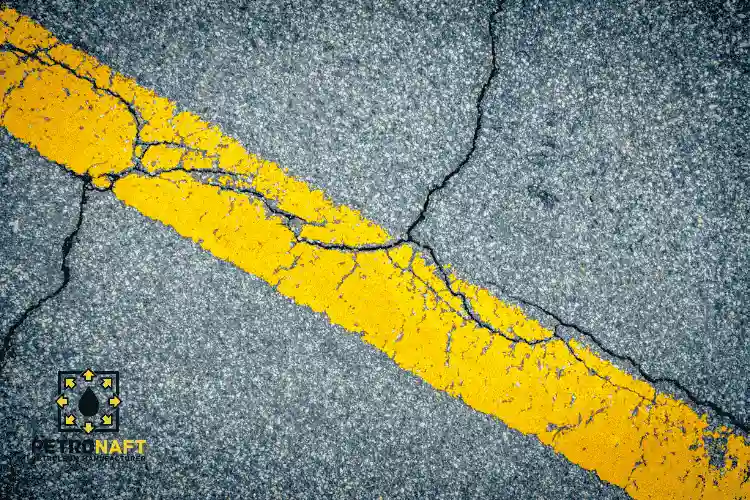
To avoid pavement damage, control water, loads, and time: design with suitable materials and drainage; build to spec; seal cracks early; manage heavy vehicles; and schedule regular inspections and preventive maintenance. This combination preserves structure, extends service life, and dramatically cuts lifecycle repair costs.
Highlights & Key Sections
Why pavements fail in the first place
Pavements rarely “suddenly” fail. Damage builds slowly as traffic and climate exploit small weaknesses in design, construction, or maintenance. Understanding these root causes is the first step if you want to avoid expensive reconstruction later.
Common primary drivers of pavement damage include:
Water intrusion through cracks, joints, edges, and poorly sealed utility cuts
Excessive or concentrated traffic loading (heavy trucks, forklifts, bus stops, braking zones)
Environmental aging – oxidation, UV exposure, freeze–thaw cycles, and high temperatures
Construction defects – poor compaction, segregated mix, thin spots, or weak base layers
Engineers classify distress into cracking, deformation (rutting, shoving), surface defects, and potholes, each closely tied to these mechanisms.
Typical distresses and what they tell you
| Distress type | What it usually signals | Early visual cue |
|---|---|---|
| Longitudinal cracks | Fatigue from repeated wheel loads / weak base | Fine cracks in wheel paths |
| Alligator cracking | Structural fatigue of asphalt layer | Interconnected “crocodile skin” pattern |
| Rutting | Permanent deformation in asphalt or base | Sunken wheel tracks, water ponding in ruts |
| Raveling | Binder aging or poor compaction | Loose stones, rough texture |
| Potholes | Untreated cracks and moisture + traffic | Localized depressions that rapidly grow |
Studies of preservation programs consistently show that when these early signs are treated promptly, pavements gain 5–10 extra years of life compared with waiting for major failure.
Key strategies to avoid pavement damage
To reliably avoid pavement damage, you need a system, not just occasional repairs. The most successful agencies follow a “right treatment on the right road at the right time” approach and plan preservation long before structural failure occurs.
Strategy overview at a glance
| Strategy area | Core actions | When to focus on it |
|---|---|---|
| Design & materials | Correct thickness, base, binder grade, drainage | New construction / major rehab |
| Construction quality | Compaction, thickness control, joint quality | During building / resurfacing |
| Drainage management | Crossfall, edge protection, clean outlets | Design + ongoing maintenance |
| Traffic & loading | Control axle loads, tire pressures, load paths | Policy + daily operations |
| Preventive maintenance | Crack sealing, surface seals, thin overlays | From early life onward |
| Monitoring & data | Regular inspections, condition indices, PMS tools | Continuous |
Below is how to implement each part in practice.
Design and materials: build durability from day one
Poor design is almost impossible to “maintain away.” If you’re planning a new road, yard, or parking area:
Match structure to loads and climate
Use traffic loading (ESALs), heavy vehicle percentages, and local freeze–thaw conditions to size asphalt and base thickness.
For truck yards and bus lanes, structural pavements with thicker base or concrete slabs are usually justified.
Specify the right binder and mix
Use performance-graded (PG) binders suited to local temperature extremes to reduce rutting and thermal cracking.
Require well-graded aggregates and proven mix designs with adequate voids and stability.
Design drainage into the structure
Include adequate crossfall (typically 2–3%) and, where needed, permeable bases or edge drains so that water never sits in or under the asphalt.
Detail joints and utility cuts
Plan joint layouts, manhole locations, and trench reinstatement details carefully—these become common failure zones if not designed for stiffness and sealing.
Example: A logistics yard designed for passenger cars but later used by 40-ton trucks will typically show ruts and alligator cracking within a few years, no matter how much patching is done. Designing for actual long-term use is the cheapest “maintenance” you’ll ever buy.
Construction quality: what to check on site
Even the best design fails if the work is poor. Owners and engineers should actively verify the following during construction:
Subgrade and base preparation
Insist on density tests and proof-rolling to identify soft spots.
Any area that pumps or deflects excessively under a loaded truck should be undercut or stabilized before paving.
Layer thickness and uniformity
Use cores or non-destructive methods to confirm that asphalt and base meet specified thickness.
Watch for segregation, cold joints, and visible texture changes, which correlate with early raveling and cracking.
Temperature and compaction control
Ensure pavers and rollers work within specified temperature windows so the mix is compacted properly.
Target air voids that balance durability with rutting resistance.
Joint construction
Longitudinal and transverse joints must be straight, well-compacted, and promptly sealed if needed. Poor joints are a leading cause of premature local failures.
Mini tutorial: owner’s construction checklist
When visiting the site during paving, quickly confirm:
Subgrade/base is well compacted, no visible pumping.
Asphalt is placed in consistent thickness, no obvious “thin” streaks.
Joints are tight and straight, without open gaps.
Weather is suitable (no rain, correct temperatures).
Test results (density, thickness) are documented and shared.
Drainage: keep water out and away
Water is the single most destructive element for flexible pavements. Once it reaches the base or subgrade through cracks or edges, load support drops sharply and cracking and potholes accelerate.
Key practices:
Maintain crossfall and surface shape
Avoid flat spots that encourage ponding, especially in wheel paths and near curbs.
When rutting traps water, treat the rut cause and re-establish proper profile.
Protect edges and shoulders
Provide stable shoulders or edge restraints so water does not run under the pavement.
Avoid steep edge drop-offs that crumble when trucks or forklifts stray off the side.
Keep inlets and ditches clear
Schedule routine cleaning of catch basins, gutters, and drainage channels, especially before rainy seasons.
Seal vulnerable interfaces
Seal at kerbs, manholes, and joints where water can bypass the surface and attack lower layers.
Drainage issues and quick responses
| Symptom | Likely issue | Immediate action |
|---|---|---|
| Frequent ponding after rain | Insufficient crossfall or rutting | Mill/overlay or level ruts; restore slope |
| Wet spots along pavement edges | Water infiltrating shoulder or side | Improve shoulder, edge drain, or lining |
| Rapid pothole reappearance | Saturated base/subgrade | Dig out, improve drainage, replace base |
Traffic and loading: manage what your pavement carries
Pavements are designed for cumulative traffic, not just time on the calendar. Overloading dramatically shortens life; a single very heavy axle can do the damage of thousands of car passes.
Practical controls:
Limit axle loads and tire pressures
Use weighbridges or mobile scales on industrial sites.
Enforce posted load limits, especially during thaw periods or after heavy rain on weaker foundations.
Separate heavy and light traffic
Designate truck lanes or parking areas with stronger structures.
Keep heavy trucks out of tight-radius corners and poorly supported edges.
Manage special operations
Reinforce or thicken pavements at bus stops, braking zones, toll plazas, and warehouse docking areas where loads are repeated in the same spot.
Example: A transit agency that upgraded only bus stop pads and approaches (not entire routes) dramatically cut rutting complaints while minimizing asphalt volumes—proof that strategic strengthening can pay off quickly.
Preventive maintenance: small treatments, big gains
Preventive maintenance aims to keep good pavements good, using relatively thin and inexpensive treatments before heavy structural damage appears. Properly timed crack sealing, surface seals, and thin overlays can extend life by 5–10 years at a fraction of reconstruction cost.
Typical preventive treatments for asphalt include:
Crack sealing and filling
Fog seals and rejuvenators
Chip seals and scrub seals
Slurry seals and micro-surfacing
Thin and ultra-thin hot-mix overlays
Diamond grinding (for concrete) followed by joint sealing
Which treatment for which early defect?
| Early defect / condition | Good preventive treatment | Expected benefit |
|---|---|---|
| Tight, non-working cracks | Crack sealing | Blocks water, slows crack growth |
| Slight raveling / oxidation | Fog seal or rejuvenator | Restores binder, improves surface |
| Moderate surface wear, no fatigue | Slurry or micro-surfacing | Renews texture, fills minor defects |
| Minor rutting, sound structure | Thin mill + thin overlay | Restores profile, extends fatigue life |
| Smooth but aged concrete | Diamond grinding + joint reseal | Improves ride, skid, and noise |
Case example: city network vs “worst-first”
A midwestern county compared “worst-first” rehabilitation with a preservation-led approach using chip seals, crack sealing, and thin overlays. Pavements receiving early preservation gained several years of additional service, with significantly lower lifecycle cost than waiting for full-depth rehabilitation.
Mini tutorial: designing a simple maintenance plan
Inventory your pavements – group roads, yards, or parking areas into segments.
Inspect annually – rate each segment (e.g., Good / Fair / Poor) and record main distresses.
Assign triggers – e.g., “cracks wider than 3 mm → crack seal” or “oxidized surface but no cracks → slurry seal.”
Budget by preservation, not just reconstruction – allocate funds to treat many “Good/Fair” segments early instead of only a few failed ones.
Review performance – check how treatments perform over 3–5 years and refine your trigger thresholds.
Operations and everyday use: site practices that protect pavements
Even outside construction and formal maintenance, daily operations have a big influence on pavement life:
Control surface contamination
Clean spills of fuel, oil, solvents, or chemicals quickly; many attack asphalt binder and accelerate raveling.
Sweep regularly
Remove sand, debris, and standing fines that hold moisture and abrade the surface under traffic.
Winter operations
Calibrate de-icing spreaders; avoid excess salt piles and use plow shoes or rubber edges to reduce gouging.
Vegetation control
Keep roots and vegetation away from edges and joints where they can lift or break the pavement.
For industrial yards, simple changes—such as designated fueling zones with reinforced pavement and spill containment—often reduce both pavement damage and environmental risk.
Monitoring and data: know your pavement’s health
You can’t manage what you don’t measure. Professional agencies use structured condition surveys and indices to track cracking, rutting, roughness, and potholes.
Practical ideas:
Visual inspections
Walk key sections at least once per year, recording distress type, severity, and extent using a simple form or mobile app.
Rating systems
Adopt a Pavement Condition Index (PCI) or similar 0–100 scale to prioritize work objectively.
Photo and video records
Capture consistent photos in the same locations to track changes over time.
Pavement management systems (PMS)
For towns, campuses, and large industrial sites, PMS software helps model deterioration and optimize timing and type of treatments across a network.
New trends that help you avoid damage earlier
Recent innovation is making it easier and smarter to protect pavements:
AI and data-driven maintenance
Image-based systems now detect cracks, rutting, and surface defects automatically from smartphone or vehicle-mounted cameras.
Research using advanced causal inference models is helping agencies evaluate long-term effects of different maintenance policies and optimize treatment timing under uncertain traffic and climate conditions.
Modern materials and recycling
Wider use of polymer-modified binders, high-modulus asphalt, and high-recycle-content mixes is improving resistance to rutting and cracking when designed correctly.
Thin surface treatments with high-quality emulsions are increasingly used to maintain skid resistance and waterproof the surface while minimizing material use.
Network-level preservation culture
Many agencies now embed pavement preservation into policy—treating it as a core asset management function rather than optional “maintenance,” with clear evidence of cost-effective life extension.
These trends ultimately give owners more precise, earlier warning signals and more effective tools to preserve their assets.
Conclusion: a simple system to avoid pavement damage
To reliably avoid pavement damage, think in terms of a simple, repeatable system: build a durable, well-drained structure, operate it within its limits, monitor condition, and apply preventive treatments early instead of waiting for failure. The combination consistently delivers longer service life, better safety, and far lower total cost than reactive patching.
Quick pavement-protection checklist
Use this as a practical end-of-article checklist:
Design thickness, base, and binder for real traffic and climate, not optimistic assumptions.
Ensure construction QA: compaction, thickness, and joint quality are verified and documented.
Check drainage every rainy season; eliminate ponding and protect edges.
Control heavy loads, especially in weak seasons or on lightly built pavements.
Inspect at least annually and record distress with photos and a simple rating.
Crack seal early; don’t let water reach the base or subgrade.
Use surface seals or thin overlays while pavements are still structurally sound.
Review performance data and adjust maintenance triggers over time.
Apply this loop consistently and you shift from “pothole firefighting” to deliberate asset management.
FAQ: avoiding pavement damage in practice
1. What is the single most important step to prevent pavement damage?
Keeping water out of the pavement structure is usually the highest-impact step. That means maintaining drainage, sealing cracks early, protecting edges, and ensuring that run-off cannot infiltrate into the base or subgrade where it weakens support.
2. How often should I inspect my pavements?
For most roads, parking lots, or industrial yards, an annual inspection is the minimum. High-value or heavily loaded pavements benefit from a quick visual check after severe weather events and a more detailed survey every 1–2 years.
3. When is the right time to seal cracks?
Cracks should be sealed as soon as they are wide enough to accept sealant but before they become wide, spalled, or interconnected. Waiting until alligator cracking appears usually means the pavement needs structural repair, not just sealing.
4. Are pothole patching and overlays enough to protect my pavement?
Emergency pothole patching restores safety but is not a long-term strategy. Large overlays on severely distressed pavement are also often short-lived. The most cost-effective approach combines early preventive treatments on good pavements with structural repair only where necessary.
5. How do heavy trucks influence pavement life?
Heavy axle loads have a non-linear effect on damage: one very heavy truck pass can equal thousands of car passes. Concentrated truck traffic in the same wheel paths quickly accelerates rutting and fatigue cracking, especially where bases or subgrades are marginal.
6. Do surface seals really make a difference?
Yes, when applied to sound pavements at the right time, surface seals slow oxidation, improve skid resistance, and keep water out of the structure. They are not a cure for structural failures but are highly effective for preserving good-condition surfaces.
7. What’s the role of subgrade in avoiding pavement damage?
The subgrade is the foundation. Weak, saturated, or variable subgrade conditions turn even a thick pavement into a flexible mat that cracks and ruts prematurely. Proper stabilization, drainage, and compaction of the subgrade are fundamental to long-term performance.
8. How can small municipalities or facilities use pavement management without big budgets?
They can start with a simple spreadsheet-based inventory, a basic 0–100 condition rating, and annual visual surveys with photos. Even a modest system like this supports better timing of crack sealing, sealing, and overlays compared with purely reactive decisions.
9. Are recycled materials in asphalt more prone to damage?
When designed correctly, recycled asphalt mixes can perform as well as or better than virgin mixes. Issues arise when high recycle contents are used without proper binder selection, mix design, and quality control, which can increase stiffness and cracking risk.
10. How does climate change impact pavement damage risk?
More frequent extreme heat, heavy rainfall, and freeze–thaw events can accelerate rutting, moisture damage, and cracking. Designing for wider temperature ranges and improving drainage capacity and resilience are increasingly important for long-term pavement performance.
Sources
FHWA – Pavement Preservation (Design & Analysis).
Overview of preservation concepts, benefits, and guidance for selecting cost-effective treatments to extend pavement life.
fhwa.dot.govAustroads – Guide to Pavement Technology, Part 7: Pavement Maintenance.
Comprehensive manual on routine maintenance practices, defect diagnosis, and treatment design for sealed pavements.
austroads.gov.auPavement Interactive – Pavement Distresses Reference.
Educational resource describing distress types, causes, and treatment strategies for flexible and rigid pavements.
pavementinteractive.orgWALGA – Road Visual Condition Assessment Manual.
Practical guidance on visual distress assessment, rating methods, and links between distress modes and underlying causes.
walga.asn.au