



Sulfonated Asphalt is a sulfonated, water-dispersible asphaltic additive used in drilling mud to control fluid loss, stabilize reactive shale, and improve filter-cake quality—especially in challenging water-based systems. When you dose and shear it correctly, it can cut seepage into permeable zones, reduce bit balling, and help maintain gauge hole with fewer instability events.
Highlights & Key Sections
Sulfonated Asphalt: What It Is and Why It Matters in Drilling Fluids
Sulfonated asphalt is an asphalt-derived, chemically sulfonated material designed to disperse in water-based drilling fluids (WBM). In practical mud engineering terms, it’s a filtration-control + wellbore-stability tool that also supports wellbore strengthening by plugging micro-fractures and sealing pore throats.
You’ll see it used when a mud system needs more than “just polymer” to keep the hole stable.
Most common reasons crews add it:
Lower API and HTHP fluid loss (tighter cake, less invasion)
Improve shale inhibition (less dispersion, firmer cuttings)
Reduce torque/drag from sticky clays and poor cake quality
Help mitigate seepage losses in mildly fractured or high-permeability intervals
How Sulfonated Asphalt Works in the Hole
Think of it as a “smart sealing” additive rather than a single-purpose polymer.
1) Filtration control through bridging + cake conditioning
It contributes fine solids that:
Pack into a denser filter cake
Reduce cake permeability
Limit filtrate invasion (which often triggers shale swelling and sloughing)
2) Shale stabilization through reduced hydration and dispersion
By limiting water invasion and conditioning the near-wellbore surface, it often:
Produces larger, harder cuttings
Reduces “muddy” returns from dispersed shale
Improves gauge retention in reactive sections
3) Wellbore strengthening trend alignment
Modern drilling increasingly relies on stress-cage / wellbore strengthening concepts (especially in narrow mud-weight windows). Sulfonated asphalt is frequently paired with bridging packages to improve sealing efficiency in micro-fractures and depleted sands.
Where It Fits Best: Mud Systems and Typical Use Cases
Best-fit environments
Inhibitive WBM: KCl/PHPA, glycol, amine-enhanced, or high-performance polymer systems
HT/HP intervals: where cake integrity matters more than ever
Permeable formations: sands and silts that leak filtrate and destabilize nearby shales
Troubled shales: swelling, sloughing, tight hole, pack-offs
Use-case snapshots (field-realistic)
Case A: Reactive shale + rising torque
Symptoms: sticky cuttings, high torque/drag, increased cavings, elevated solids control load
Typical response: add sulfonated asphalt in steps while monitoring ECD and rheology
Expected outcome: firmer cuttings, less accretion, tighter cake, smoother drilling
Case B: Seepage losses in permeable sand stringer
Symptoms: gradual pit loss, rising filtration, worsening wellbore quality
Typical response: sulfonated asphalt + properly sized bridging blend (not just more polymer)
Expected outcome: reduced seepage rate and more stable returns
Practical Dosage Guide (and What Changes with Each Step)
Dosage depends on temperature, salinity, solids, and how bad the formation is behaving. Use lab validation whenever possible.
Typical treatment ranges (rule-of-thumb)
| Objective | Starting Range | Common Working Range | Notes |
|---|---|---|---|
| General filtration control in WBM | 1–2 lb/bbl (≈2.9–5.7 kg/m³) | 2–4 lb/bbl (≈5.7–11.4 kg/m³) | Often paired with PAC/starch |
| Reactive shale stabilization | 2–4 lb/bbl (≈5.7–11.4 kg/m³) | 3–6 lb/bbl (≈8.6–17.1 kg/m³) | Watch PV/YP and shaker screens |
| HT/HP + cake quality focus | 2–4 lb/bbl (≈5.7–11.4 kg/m³) | 4–8 lb/bbl (≈11.4–22.8 kg/m³) | Validate HTHP filtration |
| Seepage-loss support (with bridging) | 2–4 lb/bbl (≈5.7–11.4 kg/m³) | 4–10 lb/bbl (≈11.4–28.5 kg/m³) | Requires correct PSD bridging |
Conversion: 1 lb/bbl ≈ 2.85 kg/m³
Mini Tutorial: How to Add Sulfonated Asphalt Without Wrecking the Mud
Most “it didn’t work” stories come from poor dispersion, wrong order of addition, or contamination.
Step-by-step mixing playbook (WBM)
Confirm baseline: record PV/YP, gels, API/HTHP fluid loss, MBT (if available), and solids %.
Ensure good shear: use a hopper/jet mixer and enough flow rate to wet the powder.
Add in stages: treat 25–35% of the planned dose, circulate, then re-test.
Keep pH stable: many systems behave best in mildly alkaline ranges; avoid drifting acidic.
Rebalance viscosity: if PV climbs, address solids and consider dispersant strategy (system-dependent).
Confirm cake: look at filter paper—aim for thin, slick, tight cake (not thick and gummy).
Order-of-addition tip (common best practice)
Hydrate bentonite/viscosifier → establish inhibition package → add polymers → then introduce sulfonated asphalt in increments.
What to Measure: A Simple Lab Validation Protocol
If you want buyer-grade confidence, run a quick pilot test on your actual mud (or a close simulation).
Minimum recommended tests
API filtrate (trend, not just one data point)
HTHP filtrate (especially for high-temp sections)
Rheology (PV/YP, gels) before/after treatment
Cuttings integrity test (hot-roll shale or field cuttings observation)
Sag/solids handling check (screens, centrifuge load, dilution rate)
A fast “go/no-go” decision table
| Result | What it usually means | Next move |
|---|---|---|
| Filtration improves, rheology stable | Good match and dispersion | Lock dose + monitor daily |
| Filtration improves, PV climbs too much | Dispersion ok, solids management needed | Improve solids control / adjust chemistry |
| Little filtration change | Under-dosed or wrong PSD strategy | Increase stepwise; review bridging + salinity |
| Cuttings still dispersing | Inhibition not complete | Strengthen inhibition package, then re-test |
Common Problems and Troubleshooting (What Mud Engineers Actually Do)
Problem 1: PV jumps and pumps work harder
Likely causes:
Over-treatment in a high-solids system
Poor solids control or excessive LGS
Incompatible chemistry causing flocculation
Fixes (in order):
Improve solids control first (screens/centrifuge optimization)
Treat in smaller increments
Review dispersant strategy for your system (don’t guess—test)
Problem 2: It “fish-eyes” or won’t disperse
Likely causes:
Not enough shear at the hopper
Dumping too fast
Adding into unfavorable salinity/pH conditions
Fixes:
Slow the addition rate
Increase shear and pre-wet approach (when operationally allowed)
Add later in the mixing sequence after system stabilization
Problem 3: Filtration still high at temperature
Likely causes:
Polymer thermal limit reached
Cake not properly conditioned
Missing bridging blend for pore/fracture sealing
Fixes:
Validate HTHP with and without asphalt
Combine with fit-for-formation bridging package
Optimize solids size distribution, not just chemical dosage
Buying and Specifying Sulfonated Asphalt Like a Pro
If you’re sourcing for real wells (not just lab demos), request documentation that helps you predict performance and consistency.
Supplier questions that prevent bad batches
What’s the recommended dosage window by application (filtration vs shale vs HT/HP)?
What’s the typical particle size (mesh distribution) and dispersion behavior?
What are the quality control parameters they test per lot?
Do they provide HTHP filtration performance guidance for WBM?
What’s the packaging, storage life, and moisture protection method?
Procurement-ready spec checklist (practical)
| Spec Item | Why it matters | What “good” looks like |
|---|---|---|
| Moisture control | Wet product clumps, disperses poorly | Consistent, protected packaging |
| Particle size consistency | Controls cake quality and plugging | Tight lot-to-lot repeatability |
| Dispersion performance | Determines field efficiency | Fast wetting under standard shear |
| Compatibility notes | Prevents surprises in salty/calcium systems | Clear do/don’t guidance |
| COA per lot | Confirms repeatability | Available and traceable |
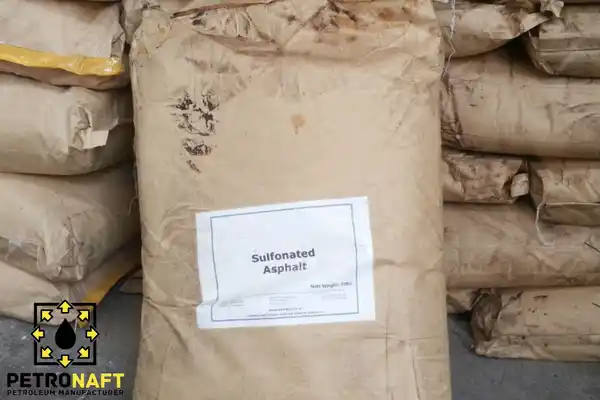
Trend Watch: Why This Additive Stays Relevant
Two big forces are keeping sulfonated asphalt in modern mud programs:
Narrow mud-weight windows + ECD sensitivity: Operators need better near-wellbore sealing without pushing viscosity into risky territory.
Higher-temperature and more complex well profiles: Extended laterals and hotter sections punish weak filter cakes and amplify instability costs.
Many high-performance programs now treat sulfonated asphalt as part of a hybrid toolkit—chemistry + bridging + real-time monitoring—to reduce non-productive time from hole problems.
Conclusion
Used correctly, Sulfonated Asphalt can be one of the most cost-effective ways to tighten filtration, stabilize reactive shale, and improve filter-cake quality in demanding water-based drilling muds. The key is disciplined dosing, strong shear during mixing, and verification with filtration and rheology tests—so you gain stability without paying for unnecessary viscosity or solids stress.
Executive Summary Checklist (Field-Use)
Confirm the problem: filtration, shale dispersion, seepage losses, or cake quality
Record baseline: PV/YP, gels, API/HTHP, solids %, cuttings condition
Add in stages with strong shear (don’t dump-and-hope)
Re-test after each step; stop when marginal gains flatten
Watch PV and solids control load; fix solids before adding more chemistry
Pair with bridging when seepage or micro-fractures drive losses
Lock a maintenance dose only after performance stabilizes
FAQ
1) Is sulfonated asphalt only for water-based mud?
It’s primarily used in water-based systems because it’s designed to disperse in water and improve cake quality and filtration. Some programs may use asphaltic materials elsewhere, but this additive is most common and effective in WBM.
2) Will it replace PAC, starch, or PHPA?
Usually no. It complements polymers by improving cake structure and sealing behavior, especially under heat or in permeable intervals. Many of the best results come from hybrid designs rather than single-additive fixes.
3) Does it help with lost circulation?
It can help with seepage losses and micro-fracture sealing, especially when combined with a correctly sized bridging package. For severe losses, you’ll typically need dedicated LCM strategies beyond sulfonated asphalt alone.
4) What’s the biggest mistake when using it?
Poor dispersion and over-treatment. If you don’t apply enough shear or you add too fast, you waste product and can spike rheology. If you treat a high-solids mud aggressively, PV can climb and create ECD risk.
5) How do I know it’s working in the field?
Look for a downward trend in API/HTHP filtrate, a thinner/tighter cake, improved cuttings integrity, fewer tight-hole indicators, and more stable torque/drag trends—while keeping rheology within your hydraulics window.
Sources
American Petroleum Institute (API) Standards — API publishes widely used drilling fluid test methods and recommended practices that guide consistent mud evaluation.
SPE OnePetro Technical Library — Peer-reviewed technical papers and field studies on drilling fluid additives, shale inhibition, and filtration control.
Society of Petroleum Engineers (SPE) — Industry knowledge hub covering modern drilling challenges, best practices, and technical developments.
ScienceDirect — Research literature on asphalt chemistry, sulfonation, and material behavior relevant to additive performance.
National Academies Press — Independent engineering and environmental references useful for understanding hydrocarbon materials and operational considerations.