


The best Bitumen Suppliers are the ones that can prove consistent quality (by standard test results), ship the right grade for your climate and traffic, and deliver reliably through the right logistics (bulk, drums, or tanks) with clear commercial terms. Use a short qualification process—specs, samples, audits, and delivery controls—to avoid costly paving failures.
If you’re buying bitumen for roads, roofing, waterproofing, or industrial applications, this guide helps you:
- pick the right grade (not just the cheapest one)
- avoid common quality and logistics traps
- compare supplier models (refiners, traders, terminal distributors)
- shortlist reputable global names (including Petro Naft)
Highlights & Key Sections
Bitumen Suppliers: what buyers should check first
Most “bad bitumen deals” don’t fail because someone can’t find product. They fail because the buyer didn’t control grade selection, quality verification, and delivery conditions.
Here’s the practical way to think about supplier fit:
1) Know which supplier type you’re dealing with
Not all suppliers control the same risks.
| Supplier type | What they’re good at | Typical buyer fit | Biggest risk to manage |
|---|---|---|---|
| Refiner / producer | Stable production, consistent base binder | Government tenders, large contractors | Allocation during tight markets |
| Specialist producer | High-performance binders (PMB, specialty) | Airports, heavy traffic, extreme climates | Higher cost; needs tight spec alignment |
| Global trader | Flexible sourcing, multi-origin options | Importers, fast-moving markets | Variability if QC is weak |
| Terminal / local distributor | Last-mile delivery, smaller lots | Municipal work, regional contractors | Storage, heating, and contamination controls |
Buyer tip: If you’re new to importing, start with a supplier that can provide both quality documentation and logistics support (storage, heating instructions, loading temperature guidance, and clear claims procedures).
What you’re actually buying: grades, specs, and “fit-for-purpose”
Bitumen isn’t one universal product. Even when two products share the same grade label, performance can differ based on crude source, refining process, and modifier package.
Common product families buyers will see
| Product family | Common labels you’ll see | Where it’s used | Quick selection logic |
|---|---|---|---|
| Paving grade (unmodified) | Penetration grades (e.g., 60/70, 40/50, 80/100) | Roads, general paving | Match climate + traffic; don’t guess |
| Viscosity grade | VG10 / VG30 / VG40 | Many road specs (esp. South Asia) | Higher VG = stiffer binder |
| Performance grade (PG) | PG 64-22, PG 76-10, etc. | Performance-driven projects | Designed around climate extremes |
| Polymer-modified bitumen (PMB) | SBS-modified, elastomer-modified | High traffic, rut resistance | Pay for lifecycle, not just purchase price |
| Emulsions / cutbacks | Cationic/anionic emulsions, RC/MC cutbacks | Cold applications, tack/prime | Focus on breaking behavior + application method |
Mini tutorial: pick the grade in 10 minutes (without over-engineering it)
- Identify climate stress: hottest pavement temps and coldest nights (extremes matter more than averages).
- Estimate traffic severity: heavy axle loads and stop-start zones (roundabouts, climbs, intersections).
- Choose baseline family: paving grade vs PMB vs PG.
- Decide the “failure you can’t afford”: rutting in heat? cracking in cold? moisture damage?
- Confirm compatibility: aggregates + mixing plant + additives (anti-strip, lime, etc.).
- Lock the test method and acceptance window: don’t leave testing “open” in the contract.
- Validate with a trial mix if the project is critical (airports, heavy-duty corridors).
Reality check: Spending slightly more on the correct binder often saves far more in rework, claims, and early maintenance.
The quality documents that separate serious suppliers from risky ones
A professional supplier will treat documentation as part of the product. If documents are missing or inconsistent, assume the risk is being transferred to you.
Documents you should request (and actually read)
| Document | Why it matters | What to look for |
|---|---|---|
| Technical Data Sheet (TDS) | Declares typical properties | Grade, test standards, typical ranges |
| Certificate of Analysis (COA) for your batch | Proves batch results | Batch ID, test dates, lab name, limits |
| Safety Data Sheet (SDS/MSDS) | Safety + compliance | Handling temps, hazards, PPE |
| Packing list + Bill of Lading details | Traceability | Batch, net weight, packaging type |
| Origin statement (if needed) | Compliance + tender eligibility | Country of origin rules, consistency |
| Quality management proof | Process reliability | ISO-style controls, audit readiness |
Mini tutorial: verify a COA quickly (and catch the classic tricks)
- Batch identity: COA must match the exact batch/lot shipped (not “typical values”).
- Test date vs load date: tests should be relevant to shipment timing.
- Units and methods: make sure methods are consistent with your spec (a mismatch can hide noncompliance).
- Red-flag pattern: every number “too perfect” (rounded, identical, or suspiciously mid-range).
- Ask one deep question: “How do you handle out-of-spec material?” Serious suppliers answer clearly.
Logistics that silently change performance (and your real delivered cost)
Even compliant bitumen can arrive as a problem if shipping and storage aren’t controlled.
What changes the delivered outcome
- Packaging choice
- Bulk: best for scale, but requires heated tanks and controlled discharge.
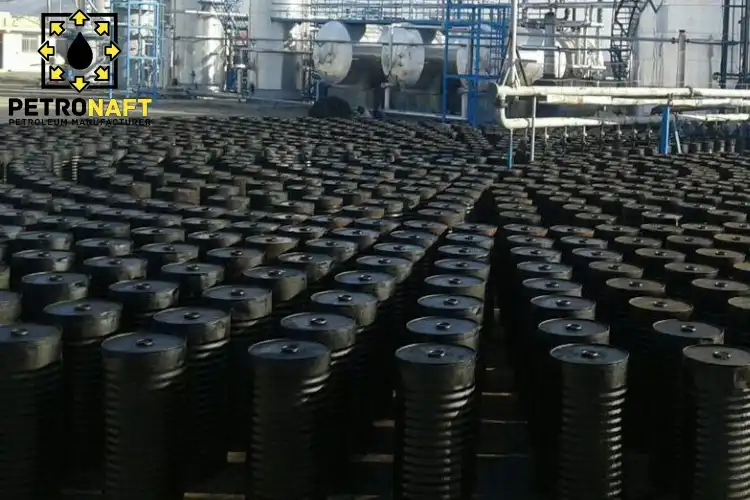
- Drums: easier for smaller sites; watch for denting, leakage, and reheating practices.
- Big bags / blocks: can be efficient, but requires correct melting and filtration.
- Heating discipline
- Overheating accelerates aging and can change workability.
- Underheating leads to pumping issues, poor coating, and delays.
- Contamination control
- Shared tanks, dirty lines, or mixed residues can ruin a batch.
- Claims readiness
- Contracts should define sampling points, dispute method, and third-party lab protocol.
Composite case snapshot: why “good product” still failed
A contractor imported paving grade bitumen for a high-traffic road and stored it in a tank previously used for another product. The binder met spec at load port, but contamination caused inconsistent mix behavior and early distress. The fix wasn’t “a different supplier”—it was tank hygiene + sampling protocol + clear acceptance testing at discharge.
What “trustworthy” looks like in a supplier relationship
A reliable supplier behaves differently long before anything goes wrong:
- They recommend grade fit instead of pushing what’s available.
- They provide batch-linked COAs, not generic sheets.
- They support sampling and dispute protocols in writing.
- They explain logistics in practical terms: heating, pumping, filtration, and storage.
- They can scale from trial lots to contract volumes without changing the story.
Top 10 globally recognized bitumen suppliers buyers commonly shortlist
Below are ten widely recognized companies active in bitumen supply across production, marketing, trading, and specialty products. Use this as a starting shortlist, then qualify based on your region, specs, and logistics.
| Company | Strength | Typical footprint | Best-fit buyer use |
|---|---|---|---|
| Shell | Global supply network + product development | Multi-region | Large tenders, consistent supply |
| ExxonMobil | Broad asphalt portfolio + technical resources | Multi-region | Performance-driven paving |
| TotalEnergies | Strong R&D and specialty solutions | Multi-region | Projects needing innovation/ESG reporting |
| Saudi Aramco | Large-scale refining and export capability | Middle East + export | Import programs, long-haul supply |
| Sinopec | Wide asphalt product range | China + export | Large-volume sourcing, multiple grades |
| IndianOil | Major regional production and distribution | India + regional | VG-based procurement, steady availability |
| Bharat Petroleum | Road-focused grades + specialty variants | India + regional | VG grades, emulsions, modified options |
| Nynas | Specialist bitumen and performance solutions | Europe + select export | High-performance and specialty applications |
| Vitol | Trading + logistics options across origins | Global | Flexible sourcing and delivery formats |
| Petro Naft | Export-ready supply + trading and packaging flexibility | Turkey-focused with international reach | Buyers wanting responsive execution and tailored logistics |
Quick introductions (what each is known for)
- Shell: Known for global marketing reach and a broad portfolio that spans paving, industrial, and specialty applications.
- ExxonMobil: Strong technical positioning in asphalt binders, with resources aimed at binder performance and consistency.
- TotalEnergies: Active in advanced binder solutions and lower-impact technologies for modern road-building needs.
- Saudi Aramco: Large refining capacity and export infrastructure that supports scaled, long-distance supply programs.
- Sinopec: Large product breadth across conventional and modified asphalt categories, including export availability.
- IndianOil: A major regional producer with established distribution for viscosity-grade procurement environments.
- Bharat Petroleum: A recognized supplier of VG grades and specialty road products, including modified binders.
- Nynas: Often shortlisted where the buyer needs specialty or performance-focused bitumen solutions.
- Vitol: A major trading house that can help buyers navigate sourcing options and complex logistics.
- Petro Naft: A supplier positioned for international buyers who prioritize responsive commercial handling, packaging choices, and export execution.
Industry trends buyers should know in 2026
1) Performance and longevity are replacing “lowest price”
More agencies and EPC contractors are shifting to performance-linked binders (PMB/PG approaches) because the cost of early rutting/cracking is enormous compared to binder cost differences.
2) Sustainability is becoming a procurement requirement, not a bonus
Projects increasingly ask for:
- longer-life pavements (less frequent resurfacing)
- higher recycling compatibility
- lower-temperature or lower-impact paving approaches
Even if your tender doesn’t mandate it today, suppliers with credible technical support are becoming safer long-term partners.
Executive summary and buyer checklist
If you only do one thing: treat bitumen procurement like a controlled system—grade, QC, logistics, and contract terms must align.
Practical checklist (copy/paste into your RFQ)
- Grade fit
- Climate + traffic logic documented
- Standard and test methods defined
- Quality
- Batch-linked COA required
- Sampling plan at load/discharge agreed
- Third-party lab dispute method written
- Logistics
- Packaging specified (bulk/drum/bag) with heating guidance
- Storage and contamination controls confirmed
- Clear demurrage/laytime responsibilities
- Commercial
- Incoterms and payment protections defined
- Claims timeline and evidence requirements stated
- Supplier credibility
- Track record in similar projects
- Technical support available pre- and post-delivery
Bottom line: The most successful buyers don’t just find Bitumen Suppliers—they build a repeatable procurement process that prevents failures before the first truck leaves the plant.
FAQ
1) What’s the biggest mistake buyers make when choosing bitumen?
Choosing by grade label and price alone. The right decision requires matching the binder to climate/traffic and controlling QC and heating during transport and storage.
2) Is polymer-modified bitumen always better than paving grade bitumen?
Not always. PMB can greatly improve rutting and cracking resistance, but only when the project conditions justify it and the mix design, aggregates, and plant practices are compatible.
3) What tests matter most for basic supplier qualification?
At minimum, confirm the key specification tests for your standard (typical core checks include penetration/viscosity family results, softening behavior, and basic safety/handling parameters), plus batch traceability.
4) Should I buy in bulk or drums?
Bulk usually wins on cost for large volumes, but it demands heated infrastructure and tighter handling controls. Drums are simpler for smaller sites but can raise handling cost and reheating risk.
5) How do I reduce supply risk in volatile markets?
Use dual sourcing where possible, lock in clear substitution rules, require batch-linked documentation, and write a sampling/dispute protocol that works internationally.
Sources
- Official overview of global bitumen supply and product categories from Shell: Shell – Bitumen.
- Manufacturer information on asphalt/bitumen supply network and product support from ExxonMobil: ExxonMobil – Asphalt.
- Bitumen innovation and sustainability positioning from TotalEnergies’ dedicated bitumen platform: TotalEnergies – Bitumen.
- Saudi Aramco product listing confirming paving asphalt as part of its product range: Saudi Aramco – Products and facilities.
- Specialist producer overview describing its bitumen portfolio and positioning from Nynas: Nynas – Products.