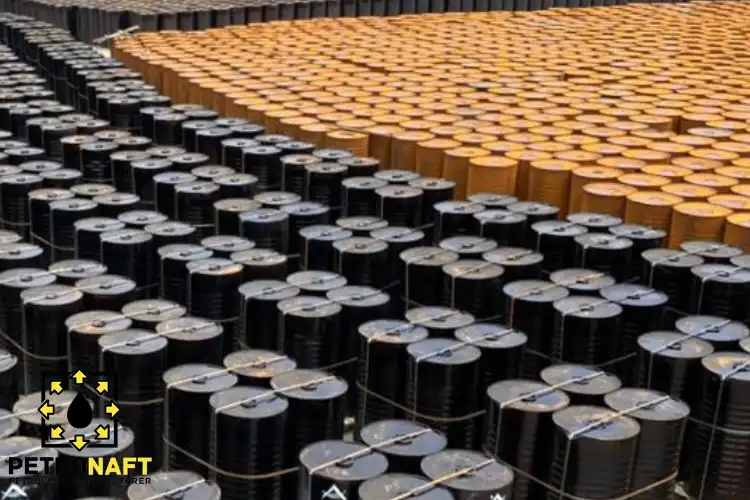
Different Grades of Bitumen are best understood by how they’re graded (penetration, viscosity, or performance) and what the numbers mean for heat, traffic, and durability. In simple terms: harder grades resist rutting in hot climates, softer grades reduce cracking in cold climates, and performance-graded binders fine-tune both for real pavement temperatures.
Bitumen isn’t “one product.” It’s a family of binders engineered for different conditions.
Pick the wrong grade and you typically see one of these outcomes within a season:
Bleeding / flushing in heat (binder too soft)
Rutting under slow heavy loads (binder not stiff enough at high temp)
Thermal cracking in winter (binder too stiff at low temp)
Raveling / moisture damage if adhesion and mix design aren’t matched
Different Grades of Bitumen: How grading systems work
Most specifications around the world fall into three core grading logics, plus a few specialty families.
1) Penetration grades (the most familiar “X/Y” grades)
Penetration is measured by how far a standard needle penetrates into the binder at 25°C under controlled conditions.
Lower numbers = harder binder. Higher numbers = softer binder.
Common penetration grades and where they fit
(Exact offerings vary by standard and region; the pattern remains consistent.)
Pen grade
Relative hardness
Typical climate/traffic fit
Real-world example
20/30 or 35/50
Hard
Hot climates, heavy loads
Industrial yards, heavy-duty base/binder layers
40/60 or 50/70
Medium-hard
Warm to moderate climates
Urban arterials, standard highways
60/70 or 70/100
Medium
Moderate climates
General-purpose asphalt mixes
80/100 or 100/150
Soft
Cooler climates, lower rut risk
Regions with colder winters, fatigue-sensitive surfaces
160/220+
Very soft
Specialized cold applications / blending
Used when extra flexibility is required
Mini tutorial: “Read” a penetration grade fast
If your pavement suffers summer rutting → move harder (lower penetration) or consider PG/PMB.
If your pavement suffers winter cracking → move softer (higher penetration) or consider PG with lower-temperature capability.
If traffic is slow and heavy (ports, bus lanes, climbs) → hardness alone may not be enough; modified binders often pay back.
Practical note for buyers: penetration alone doesn’t tell you how the binder behaves after aging or under repeated loading. That’s why many agencies are moving toward PG and MSCR-based specifications.
2) Viscosity grades (VG): simple procurement, better temperature control
VG systems classify bitumen by viscosity at specified temperatures (commonly including 60°C and/or 135°C). It’s often preferred where mixing/compaction temperatures and pumpability matter as much as “hardness.”
VG grade
Relative stiffness
Typical fit
What it helps control
VG10
Softer
Cooler climates or fatigue-sensitive layers
Reduces low-temp cracking risk
VG30
General-purpose
Most standard roads
Balanced workability and stability
VG40
Stiffer
Hot climates / heavy traffic
Improves rut resistance
Buyer tip: if your plant struggles with workability (mix feels “tight” or needs too much heat), ask for the rotational viscosity and confirm the grade matches your production window.
3) Performance Grade (PG): the “climate + traffic” language
PG grading is built around pavement design temperatures, not just a single lab temperature.
PG 64-22 is read like this:
64 = high-temperature grade (resists rutting up to that pavement temp range)
-22 = low-temperature grade (resists thermal cracking down to that pavement temp range)
Use this as a starting framework—final selection should reflect local design guides and mixture design.
Situation
Typical PG direction
Why
Hot region + slow heavy trucks
Higher first number (e.g., 70/76)
Rutting happens when binder stays too soft
Cold winters / big night-day swings
Lower second number (e.g., -28 / -34)
Cracking is driven by stiffness and relaxation
High RAP content
Often needs careful balancing
RAP stiffens binder; grade choice must account for it
Intersections, climbs, bus lanes
Consider MSCR/traffic-based specs
Repeated high shear loads punish “standard” binders
Trend that matters right now: MSCR and traffic-focused grading
Many road owners increasingly require rutting performance verified under repeated stress, especially for modified binders. This is where MSCR-based approaches (and traffic categories) become important in procurement, not just mix design.
Polymer Modified Bitumen (PMB): when standard grades aren’t enough
PMB adds polymers (commonly elastomeric types like SBS) or other modifiers to improve:
Elastic recovery (better crack resistance and deformation recovery)
Extreme climates (very hot summers or harsh winters)
Case example: “Hot-climate rutting problem at a logistics hub”
A logistics yard using a standard mid-grade paving bitumen saw wheel-path depressions during peak summer with slow-moving loaded trucks. Upgrading to a higher-performance binder family (PG/PMB depending on spec) plus verifying compaction and air void targets reduced permanent deformation risk without needing excessive binder reduction (which can cause raveling).
Procurement note: PMB performance depends on compatibility, storage stability, and proper handling temperatures. Always request a COA with the performance tests your spec recognizes.
Oxidized (blown) bitumen grades: built for waterproofing and industrial stability
Oxidized grades are commonly expressed like 115/15:
115 ≈ softening point (Ring & Ball, °C)
15 ≈ penetration (hardness)
These grades are engineered to be more heat-stable and less temperature-susceptible for non-paving uses.
Oxidized grade
Typical behavior
Common uses
115/15
Very high softening point, very hard
Roofing membranes, industrial waterproofing
105/35
High softening point, less hard
General waterproofing, coatings
95/25 (varies by market)
Balanced
Damp-proofing, adhesives, protective layers
Real example: torch-on membranes often rely on oxidized grades because they hold shape on hot roofs and resist flow.
Emulsions and cutbacks: for cold application and spray work
These are “application-focused” grades.
Emulsions (water-based)
Used for tack coats, chip seals, slurry/micro surfacing, and some cold mixes. Key choices include:
Setting speed: rapid / medium / slow
Charge type: cationic or anionic (depends on aggregates and chemistry)
Cutbacks (solvent-based)
Cutbacks improve low-temperature workability, but many markets limit them due to VOC emissions—so emulsions and warm-mix approaches are increasingly preferred.
Family
Best for
Watch-outs
Emulsions
Safer handling, lower VOC, widespread use
Need correct breaking/setting behavior on site
Cutbacks
Cold weather workability
Regulatory limits, drying time, emissions
How to choose the right grade: a buyer-first framework
Use this if you’re purchasing for projects, tenders, or long-term supply agreements.
Step 1: Lock the application
Hot mix asphalt (surface, binder course, base)
Surface treatment (chip seal, tack coat, fog seal)
Step 5: Validate logistics and handling (this prevents quality disputes)
Confirm loading temperature and safe heating limits
Ensure tank cleanliness (water and diesel contamination are common culprits)
Agree on sampling method and dispute protocol (retain samples)
Mini tutorial: how to read a COA (Certificate of Analysis) like a pro
When comparing suppliers or shipments, scan in this order:
Spec reference (which standard and grade?)
Consistency (penetration or viscosity, depending on grading system)
Softening point (helps predict heat sensitivity)
Aging-related results (if included—very important for durability)
Flash point & solubility (safety + purity)
Homogeneity notes (especially for PMB; separation risk matters)
Red flag pattern: a binder that meets penetration but shows weak aging performance or inconsistent viscosity across batches.
Common field problems and what the grade usually has to do with it
Rutting: binder too soft at high temperature, or traffic loads exceed design → move to higher-performance family (PG/PMB) and review mix design.
Bleeding/flushing: excess binder, low air voids, or soft binder → confirm grade, gradation, and compaction.
Thermal cracking: binder too stiff at low temperature → select lower-temperature PG or softer family; consider mix design adjustments.
Raveling: binder content too low, poor adhesion, or aging → check binder selection, additives, and aggregate quality.
Executive Summary checklist (use this before you buy or specify)
I know the application (HMA, surface treatment, waterproofing, industrial).
I matched climate and traffic to the grade family (rutting vs cracking risk).
I selected the correct grading system required by the project spec (Pen/VG/PG/MSCR).
I defined the critical properties to verify on the COA (not just the grade label).
I confirmed handling limits (loading temps, storage stability, contamination controls).
I aligned sampling, testing, and dispute procedures with the contract.
Conclusion: Choosing Different Grades of Bitumen is not about memorizing numbers—it’s about aligning grading logic, climate, traffic, and application so the binder performs predictably from plant to pavement (or from drum to waterproofing layer).
FAQ
1) Is 50/70 always better than 70/100 for roads?
Not always. 50/70 is typically harder and can resist rutting better in warm conditions, but in colder climates it may increase cracking risk. The “better” choice depends on climate, traffic speed, and mix design.
2) What does PG 64-22 actually guarantee?
It indicates the binder meets performance requirements at a high pavement temperature around 64 and a low pavement temperature around -22 (per the grading framework). It doesn’t replace mix design or construction quality control.
3) When should I choose PMB instead of a standard paving grade?
Choose PMB when you face heavy traffic, slow loads, extreme temperatures, thin overlays, or cracking/rutting history. PMB often reduces lifecycle cost when failures are otherwise frequent.
4) Can I switch grades to solve rutting without changing the mix design?
Sometimes, but it’s risky. Rutting is influenced by binder grade, aggregate structure, air voids, and compaction. Grade upgrades work best when paired with mix verification and field compaction control.
5) What grade is best for waterproofing membranes?
Oxidized/blown bitumen grades are commonly used because they offer higher softening points and dimensional stability. The exact grade should match the membrane formulation and the service temperature range.
Sources
ASTM D946/D946M — Penetration-graded asphalt cement specification used widely for paving-grade classification: ASTM D946/D946M
ASTM D6373 — Performance-graded asphalt binder framework that ties grade to pavement design temperatures: ASTM D6373
AASHTO M 332 — MSCR-based performance grading that adds traffic loading considerations for rutting performance: AASHTO M 332
NEN-EN 12591:2009 — European framework for specifications and test methods for paving grade bitumens: NEN-EN 12591
FHWA LTPPBind Online User Guide — Practical guidance for selecting PG binders using climatic models and reliability concepts: FHWA LTPPBind Guide