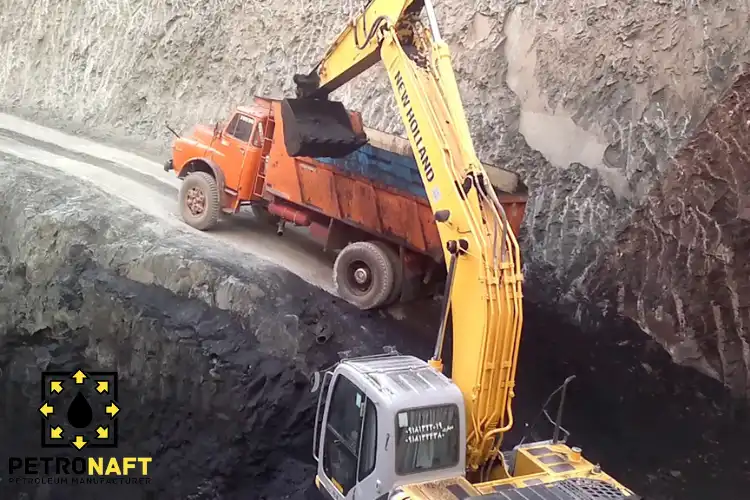
The region includes a variety of gilsonite manufacturers, processors, and suppliers. These producers and exporters typically supply gilsonite in lump, granular, and micronized powder forms for oil and gas drilling, asphalt modification, coatings, foundry, and chemical industries. International buyers should compare manufacturers based on quality consistency, ash content, particle size, softening point, lot-specific COA, SDS, export packaging, and regular supply capability.
Highlights & Key Sections
Why buyers actively search for Iranian gilsonite
Iran is a major source of naturally occurring gilsonite (natural asphalt/uintaite) used as a performance additive across industries. Buyers prefer suppliers who can prove consistency—not just availability.
Common demand drivers:
Iran Gilsonite Manufacturers: how to evaluate them like a pro
If you only compare “price per ton,” you’ll overpay later through rework, clogged dosing systems, or unstable performance. Instead, qualify the manufacturer like you would any critical raw material supplier.
What “good” looks like in practice
Mine-to-mesh capability: control from extraction to final particle size (lump, granular, micronized)
Repeatable QA: the same sieve curve and ash range across lots
Technical documentation: COA per lot + SDS + packing list + traceability
Export readiness: stable lead times, compliant labeling, predictable container loading
Problem-solving: can recommend mesh and dosage for your exact application
Buyer’s evaluation matrix (save this for your RFQ)
What to check
What to ask for
What good looks like
Red flags
Ash & purity
Typical ash range + test method
Tight, repeatable range aligned to your use
“Varies” without limits
Particle size
Sieve analysis (PSD) for each lot
Stable curve; minimal oversize/fines surprises
No PSD, only “mesh” claim
Softening point
Method + typical values
Consistent across lots; matches your process window
Big swings between shipments
Moisture & flow
Moisture % + anti-caking approach
Low moisture; free-flowing powder
Lumps, bridging, bag sweating
Packaging
Bag type, liner, palletizing
Clean, sealed, export-grade packaging
Thin bags, weak seams, dust leakage
Traceability
Lot/batch numbering system
Batch code ties COA to each shipment
COA not linked to shipment
A practical shortlist of leading producers and processors in Iran
The market includes miners, processors, and export-focused manufacturers. The names below are widely visible in international trade and commonly short-listed by buyers, but buyers should still qualify suppliers with samples and documentation.
Manufacturer / exporter
Typical strengths for buyers
Common supply forms
Best-fit use cases
Nikan West Gilsonite Company
Broad product range and packaging options; trade-focused operations
Lump, powder, sized materials
Drilling mud, asphalt, general industry
Zista Gilsonite
Product segmentation by application; emphasizes controlled processing
Powdered and graded products
Asphalt and industrial blending
Janis Group
Processed grades positioned for export; focuses on documentation and inspection workflows
Markets mine-supply and export capability; application-led product lineup
Lump and powder meshes
Drilling fluids and asphalt blending
Quick reality check: “Leading” in gilsonite usually means consistent lots + reliable logistics, not the loudest marketing. Always run a sample qualification before committing to volume.
Gilsonite grades and mesh sizes that buyers actually use
Most purchasing problems come from ordering the wrong ash level or particle size for the job.
Fast selection guide
Application
Preferred form
Common mesh / sizing
What matters most
Oil-well drilling fluids (FLC)
Micronized powder
Fine meshes (application-dependent)
PSD stability, dispersion, low moisture
Asphalt binder modification
Powder or granular
Medium-to-fine for fast blending
Softening point, compatibility, uniform dosing
Foundry & resin systems
Powder
Controlled fine
Ash control, repeatable reactivity
Paints/inks/coatings
Fine powder
Fine meshes
Color consistency, solubility/compatibility, low grit
Buyer tip: If your plant uses automated feeders, insist on tight PSD and anti-caking packaging, or you’ll see bridging and inconsistent dosing.
Mini tutorial: qualify a manufacturer in 7 steps (takes days, saves months)
Use this workflow to select among Iran Gilsonite Manufacturers with minimal risk.
Define your target spec (ash range, PSD, softening point window, moisture limit, packaging).
Request three items up front: lot-specific COA, sieve analysis, and SDS.
Buy small samples from 2–3 suppliers in the exact form you’ll consume (don’t test lump if you’ll run powder).
Run incoming QC (even basic checks help):
Ash content
Moisture
Sieve analysis (PSD)
Softening point (or your internal proxy test)
Do a bench blend in your real formulation:
Drilling: check filtration/fluid-loss behavior and stability
Asphalt: check workability and stiffness/rutting indicators
Stress-test handling: open bags, pourability, dusting, caking after storage simulation.
Lock a “production spec + acceptance plan” into the contract (what happens if a lot fails).
What drives price and lead time in real deals
You’ll usually see pricing move with:
Ash range and consistency requirements (tighter control costs more)
Micronizing and PSD control (fine powder with stable distribution is premium)
Packaging and cleanliness (liners, pallets, dust control)
Inspection and documentation (third-party inspections, additional test reports)
Logistics complexity (incoterms, container availability, port routing)
Practical move: Ask for two quotes—standard spec vs tight spec—so you can quantify what consistency is worth in your process.
Trends shaping gilsonite buying in 2026
Two shifts are pushing buyers to be more technical:
Performance-driven pavements: More projects demand binders that resist rutting and temperature swings, favoring controlled modifiers and repeatable blending behavior.
Higher expectations on traceability: Buyers increasingly request batch-level documentation, clearer QA methods, and consistent lot performance to reduce operational risk.
Conclusion: how to choose Gilsonite manufacturers with confidence
The smartest way to buy from qualified gilsonite manufacturers is to treat gilsonite like a performance chemical, not a commodity rock. Shortlist proven producers, qualify by sample and documentation, and contract around measurable specs—especially ash range, PSD, moisture, and traceability.
Executive checklist (copy/paste into your procurement file)
Target spec defined (ash, PSD, moisture, softening point)
Lot-specific COA + sieve analysis + SDS received
Samples tested from 2–3 suppliers in the final consumed form
Bench trial completed in real formulation (drilling/asphalt/coating)
Handling verified (flowability, caking, dusting)
Packaging confirmed (liners, pallets, labeling)
Acceptance criteria written into contract + dispute method agreed
Logistics plan confirmed (lead time, port, container loading)
Traceability confirmed (batch codes match COA)
Supplier communication speed verified (response time, tech support)
FAQ
1) What’s the difference between gilsonite, natural asphalt, and uintaite?
They’re commonly used interchangeably in industry. In practice, buyers focus less on the name and more on measurable properties like ash content, softening point, and particle size distribution.
2) Which test results matter most when buying gilsonite powder?
Ash content, moisture, and sieve analysis (PSD) are the big three. Together they predict blending behavior, dosing stability, and performance repeatability.
3) Why do some gilsonite shipments perform differently in drilling fluids?
Small changes in PSD and moisture can alter dispersion and filtration behavior. Consistent micronizing and batch-level QC reduce these swings dramatically.
4) How do I avoid overpaying for “premium” gilsonite?
Define your real performance need first, then compare suppliers on measurable specs and trial results. Paying extra only makes sense when tighter control reduces your process risk or improves output quality.
5) What packaging is best for export shipments?
For powder, lined bags and clean palletizing help prevent moisture pickup and caking. For lump/granular, strong bags and dust-controlled handling reduce contamination and loss.
6) Who are the main Gilsonite manufacturers in the region?
Several established manufacturers and suppliers serve international markets with lump, granular, and micronized gilsonite grades.
Sources
Elsevier — Peer-reviewed research on Iranian gilsonite as an asphalt binder modifier, including performance impacts and material considerations. Construction and Building Materials
TU Delft — State-of-the-art review summarizing natural bitumen use in pavement engineering and modern performance requirements. Natural bitumen in pavement review
Society of Petroleum Engineers — Technical paper on gilsonite use in drilling fluids for fluid-loss/lost circulation control. OnePetro